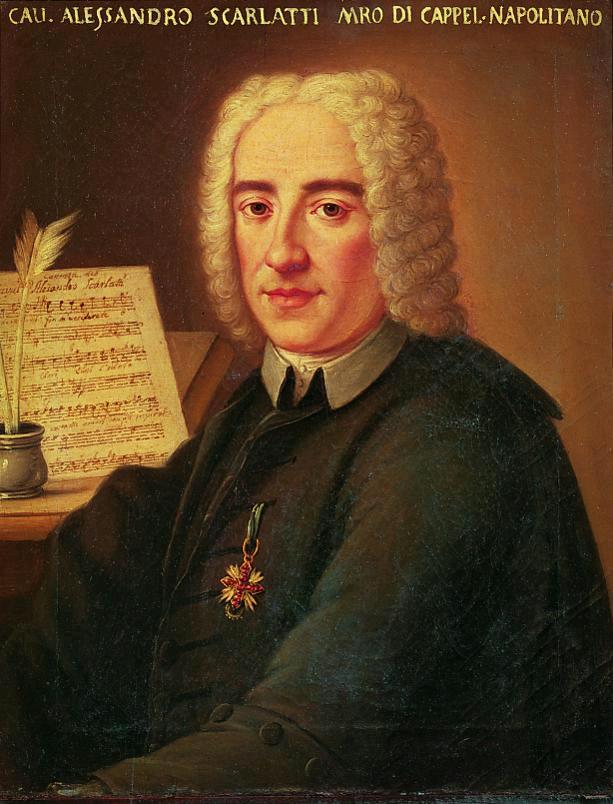
Alessandro Scarlatti · Baroque
1660 – 1725
c. 1680 - 1725 · Songs for voice and continuous or instruments · Rome and Naples
Tonality
Without a unique tone. It is a repertoire of hundreds of cantons and each has his own.
Instruments
- Continuous low (key and cello)
- In some, violins or other instruments
From the atril
If the operas were Scarlatti's public window, the cantatas were his private workshop. He wrote a few six hundred, almost all for a voice with a continuous bass, although some include violins or flutes. They were sung in the palaces of Roman cardinals and princes, before an understanding audience who appreciated the harmonic awe that did not fit in a theatre.
I can INTEREST you.

The structure is usually simple, repetitive and aria repeated twice, but inside are all: distant modulations, chromatisms, pastoral laments and small miniature dramatic scenes. For the continuist it is a mine, because the bass is almost always one more character. In studying them, it is understood why Handel, who met Scarlatti in Italy, learned so much from him.
What to hear
- The unexpected modulations in the recites, more bold than in their operas.
- The pastoral aria in calves, with its melancholic balance.
- The cantatas with forced violins, where the instruments comment on each sentence of the voice.

