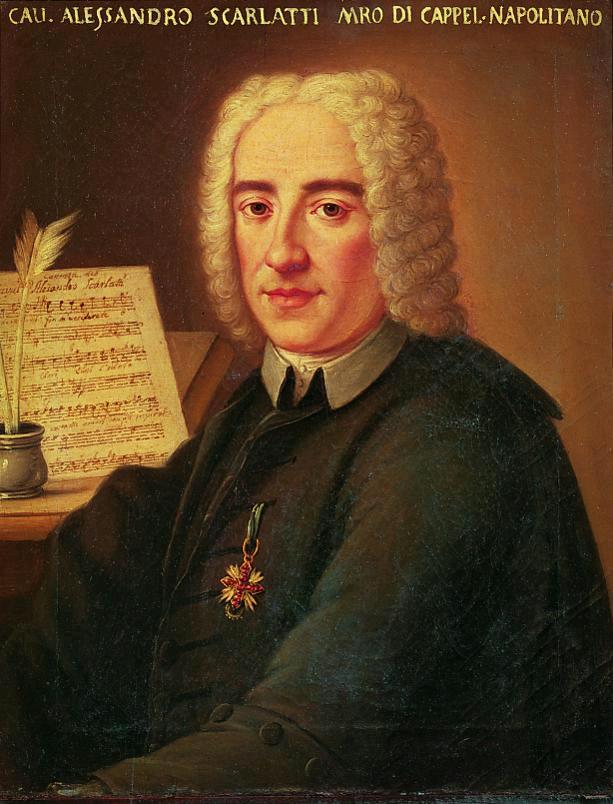
Alessandro Scarlatti · Baroque
1660 – 1725
1724 · Soprano, contralt, rope and continuous · Naples
Tonality
Without a unique tone. It is a succession of numbers on the strokes of the poem, each with its own tonality, within a general climate in a smaller way.
Instruments
- 2 violins
- Continuous low
From the atril
Scarlatti wrote it in Naples shortly before he died, for the Brotherhood of the Knights of the Virgin of the Dolores, who played it every Holy Friday. A decade later, Pergolesi was given a new Stabat Mater to replace him, with the same staff: soprano, contralto and rope. That is why we should listen together: Scarlatti is the model of the one who was born.
I can INTEREST you.

It's music of extreme intimacy. The two voices intertwine in duos full of soft disonances, and the rope almost always accompanies in a background, with figures that sigh. Compared to Pergolesi, it is more severe and more counterpointed, less theatrical. From the violin, the key is containment: playing piano, without excessive vibration, and letting the voices bear the emotional weight of the text.
What to hear
- The soprano and contralto duos, with their chains of disonances that are gradually resolved.
- The figures of «sigh» on the rope, notes cut by silences.
- The final amen in style, more sober than that of Pergolesi.

