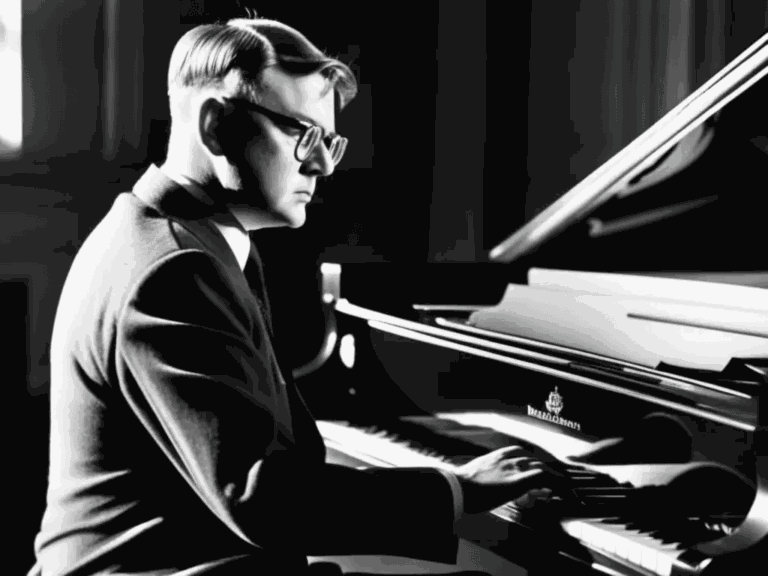
Dmitri Shostakovich · 20th century
1906 – 1975
1941 - 1942 · Symphony · Kúibyshev and Leningrad
Tonality
Do major, op. 60.
From the atril
Shostakovich began writing it in the summer of 1941, in Leningrad, as German troops surrounded the city; he himself served as a voluntary firefighter on the roof of the conservatory. Evacuated to Kúibyshev, it ended in December and was released there in March 1942. The score, microfilmed, traveled to the West and Toscanini directed it in New York that same summer. But the legendary premiere was Leningrad, on August 9, 1942: Karl Eliasberg brought together the few surviving musicians of the radio orchestra, famelics, and the concert was rebroadcast by speakers to the enemy lines.
I can INTEREST you.

It is a work of enormous proportions, more than seventy minutes and an orchestra with reinforced metals. Its most famous page is the «invasion episode» of the first movement: a trivial melody, almost of an opera, which begins in pianissimo over a box-fold and repeats itself over and over again, growing as the Bolero from Ravel to become a crushing machine. For some he portrays the Nazi army; the composer himself suggested that he spoke of all tyranny. After a nostalgic scherzo and an adagio of coral air, the end slowly conquers the light of the major do.
What to hear
- The «invasion episode», on the crate of the box.
- The fagot thing that cries after the invasion.
- The slow conquest of the major do in the end.
Listen
Shostakovich Symphony No. 7 "Leningrad" · Carmelo Aegea García
When you press the YouTube player will be loaded.

