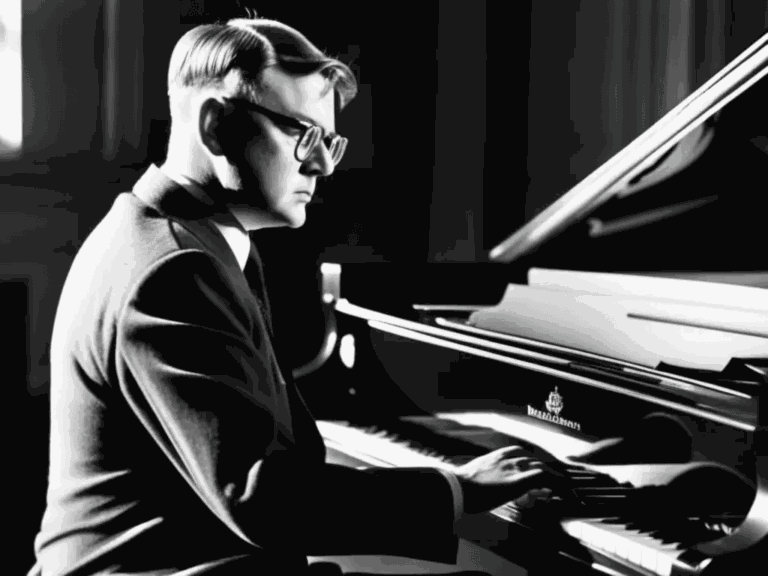
Dmitri Shostakovich · 20th century
1906 – 1975
1937 · Symphony · Leningrad
Tonality
Minor re, op. 47.
From the atril
After the conviction of Lady Macbeth In 1936, Shostakovich lived with the suitcase prepared by the door, afraid to be stopped in the middle of the purge. The Fifth It was his last chance. Evgueni Mravinski premiered it with the Leningrad Philharmonic on November 21, 1937, and at the end of the audience applauded on its feet for more than half an hour; many cried in the slow. The official press presented it as «the creative response of a Soviet artist to a just criticism», and the composer was rehabilitated.
It is his most classical symphony in the form, and also the most ambiguous. The first movement starts with a gesture of canon, rough and distressed strings. The scherzo is a mockery ländler, almost mahlerian. The long, without metals, with the strings divided into many voices, the harp and the celestial, is one of the most desolate pages of the century. And the end, with its triumphal march and its long coda in re major, raises the big question: sincere joy or joy imposed on him? Each director responds to it in his own way with the tempo, and so there are so many different versions of those last compasses.
What to hear
- The string canon with which the play begins.
- The length, without metals, with harp and celestial.
- The final code, with the repeated string and timbals: triumph or irony?
Listen
Shostakovich: Symphony No. 5 in D minor, Op. 47 [Maxim Shostakovich] · Miguel Fontes Meira
When you press the YouTube player will be loaded.

