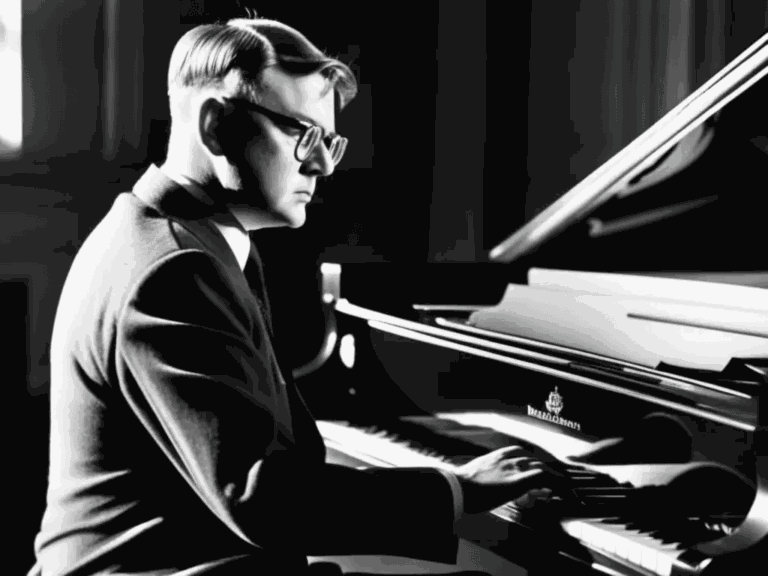
Dmitri Shostakovich · 20th century
1906 – 1975
1953 · Symphony · Leningrad
Tonality
My minor, op. 93.
From the atril
After eight years without writing symphonies, Shostakovich composed the Tenth in the summer and autumn of 1953, a few months after Stalin's death. Mravinski premiered it with the Leningrad Philharmonic on December 17. His reception opened an intense public debate in the USSR about the freedom of the artist, and many consider it their best symphony.
I can INTEREST you.

The first movement, a moderate of more than twenty minutes, grows from a murmur of cello and contrabajos to terrible climax. It is followed by a very brief and wild scherzo of mechanical violence, which according to a tradition discussed would be a portrait of Stalin. In the third movement there are two musical signatures: the DSCH motif of the composer himself (re, my bemol, do, yes) and a call of repeated trumpet twelve times that figures the name of Elmira Nazírova, a student of which she was in love. In the end, after a slow introduction, the DSCH ends up imposing itself at full volume on the timbals: the individual survives and signs the work.
What to hear
- The scherzo, four minutes of fury.
- The trumpet call of «Elmira» in the third move.
- The DSCH motive hammered by the timbals at the end.
Listen
Gustavo Dudamel - Shostakovich Symphony No. 10 (BBC Proms 2007) · Gustavo Dudamel
When you press the YouTube player will be loaded.

