The best classical music
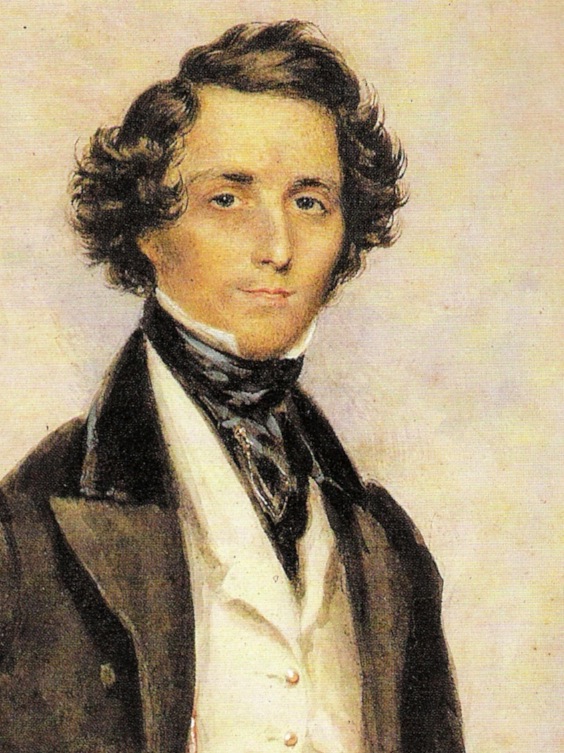
Jakob Ludwig Felix Mendelssohn Bartholdy, known as Felix MendelssohnHe was a composer, pianist, conductor and German professor of the romantic period. The 3 February 1809 in Hamburg and died the 4 November 1847 in Leipzig. Mendelssohn is recognized as one of the most important composers of the 19th century, highlighting for his early skill, his mastery of multiple musical forms and his influence on classical music.
Life of Mendelssohn
- Children and training:
- Mendelssohn was born into a wealthy and cultured family. His grandfather, Moses Mendelssohn, was a prominent Jewish philosopher, although the family turned to Christianity when Felix was a child.
- He showed a prodigious talent from a very young age, beginning to compose at age 11. He received an exceptional musical education, studying piano and composition with teachers like Carl Friedrich Zelter.
- At 16, he wrote his first masterpiece: String Octet in My Major Bemol.
- Music career:
- Mendelssohn was a defender of the music of Johann Sebastian Bach, whose work had fallen into oblivion. In 1829, he directed an interpretation of the Passion according to St. Matthew of Bach, which helped to revive interest in the Baroque composer.
- He traveled around Europe, visiting countries like England, Scotland, Italy and France, which influenced his music. For example, its Symphony number 3, «Scottish»and its Oberture «The Herbrids» They were inspired by their trips to Scotland.
- He was director of the Gewandhaus Orchestra of Leipzig, where he promoted contemporary and classical music.
- Legacy and death:
- Mendelssohn was a prolific composer, writing works in almost all genres: symphonies, concerts, camera music, operas and corals.
- His health deteriorated after the death of his sister Fanny, also a talented composer, in 1847. Mendelssohn died a few months later, at age 38, probably due to a stroke.
Highlights
Mendelssohn composed a wide variety of works, including:
- orchestral music:
- Symphony number 3 in The Minor, «Scottish» (1842).
- Symphony number 4 in The Major, «Italian» (1833).
- Oberture «The Herbrids» (1830), inspired by the Fingal Grotto in Scotland.
- Concert for violin in My minor, Op. 64 (1844), one of the most played violin concerts.
- Camera music:
- String Octet in My Major Bemol, Op. 20 (1825).
- String quarters, as in Quartet in Fa minor, Op. 80.
- Coral music:
- Elijah (Elijah), an oratory based on the life of the biblical prophet.
- Paulus (Paul)another oratory inspired by the life of St. Paul.
- Music for piano:
- No words, a collection of lyrical pieces for piano.
- Serious changes, Op. 54.
- Accidental music:
- Summer night dreamincluding the famous Wedding March.
Music style
- Mendelssohn combined classical and romantic elements in his music. His works are characterized by formal clarity, elegant melodies and a masterful use of orchestration.
- He was an advocate of the German musical tradition, but also incorporated influences from his travels and literature.
Legacy
Mendelssohn is remembered as one of the most influential composers of Romanticism. His music, although sometimes criticized for being too conservative, has lasted for his impeccable beauty and technique. In addition, his work as director and educator helped to consolidate classical music in the European culture of the XX.classical century, and his works continue to be interpreted around the world.
Concerts for all
The concerts of classical music, modern music and Jazz for all audiences at @ ondabradio.

The best quality of dissemination
DAB + (Digital Audio Broadcasting)
Listen to DABclassic on your FM / DAB + radio with the best quality in Spain in Barcelona, Ibiza, Madrid, Murcia, San Sebastián, Sevilla, Tenerife Norte, Valencia and Zaragoza.
Patrocina DABclassic radio. info @ dabclassic.com




Explore the Episodes
Podcast

