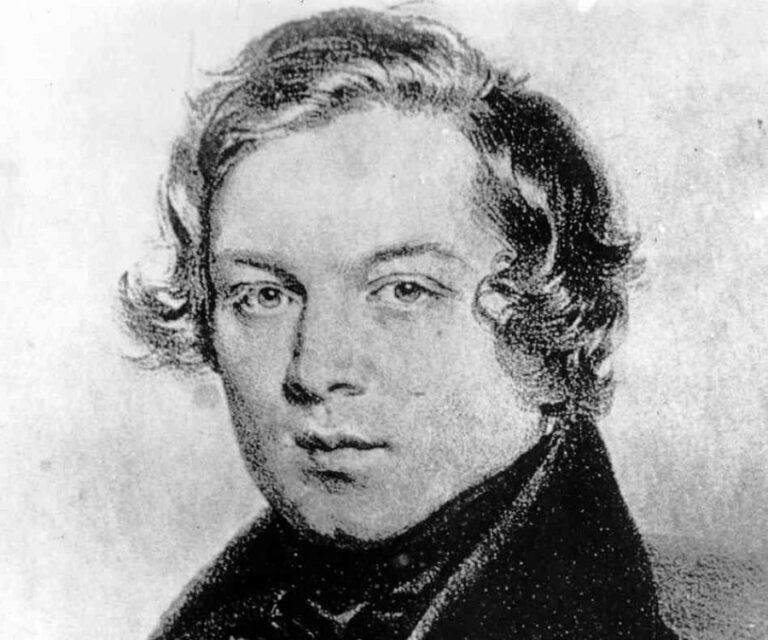
Robert Schumann · Romanticism
1810 – 1856
1850 · Concert for cello · Düsseldorf
Tonality
From the atril
Schumann wrote his concert for cello in just two weeks, in the fall of 1850, shortly after he settled in Düsseldorf as the musical director of the city. However, he did not hear it in public: it premiered in 1860, four years after his death. For a long time it was touched little, but today it is one of the pillars of the repertoire of the violonchelists.
I can INTEREST you.

The three movements are chained without pause, as a single great arch. After three chords of the winds, the cello enters with a long, melancholic and passionate melody, which seems to come out of a song. Schumann is not looking for external light, but for expression: the instrument sings almost all the time, in all its records, with an intimacy that brings it closer to the lied. The slow movement is a short duo of enormous tenderness, in which the soloist dialogue with the main cello of the orchestra. The end is stronger and brighter, with a cadence accompanied by the orchestra. For the soloist, the challenge is to maintain the song and intensity without falling into the monotony.
What to hear
- The initial melody of cello.
- The duo with the orchestra's cello.
- The cadence accompanied by the end.

