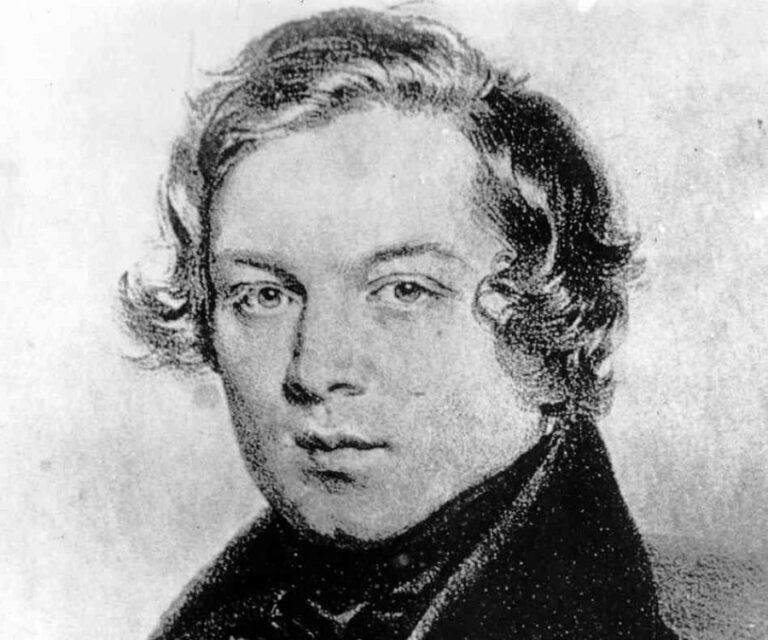
Robert Schumann · Romanticism
1810 – 1856
1835 · Piano · Leipzig
Tonality
Without a unique tone. It's a collection of short pieces and each has his own.
From the atril
Carnival, composed between 1834 and 1835, bears the subtitle «Small scenes on four notes». These notes come from the letters A-S-C-H, the name of the hometown of Ernestine von Fricken, the young woman of whom Schumann was in love then, and who also appear in the name Schumann. With them he built a succession of twenty-one short pieces that portray a dance of masks.
I can INTEREST you.

For the dance, characters of the common dell'art, such as Pierrot and Arlequin, are parading together with the two faces of Schumann himself: Florestan, passionate and impetuous, and Eusebius, a dreamer and introvert. Portraits of friends and colleagues also appear: «Chopin»a Polish-style night; «Paganini», a dimmed passage; «Chiarine», which is young Clara Wieck, and «Star»That's Ernestine. In the end, «March of David's companions against the Philistines» face the true artists with the bourgeois of mediocre taste. It is a work full of fantasy, humor and tenderness, and a great character challenge for the pianist, who must change the world in each piece.
What to hear
- The portraits of Florestan and Eusebius.
- «Chopin» and «Paganini».
- The final march against the Philistines.
Listen
Robert Schumann - Op.9, Carnival (Hamelin) · TheExarion
When you press the YouTube player will be loaded.

