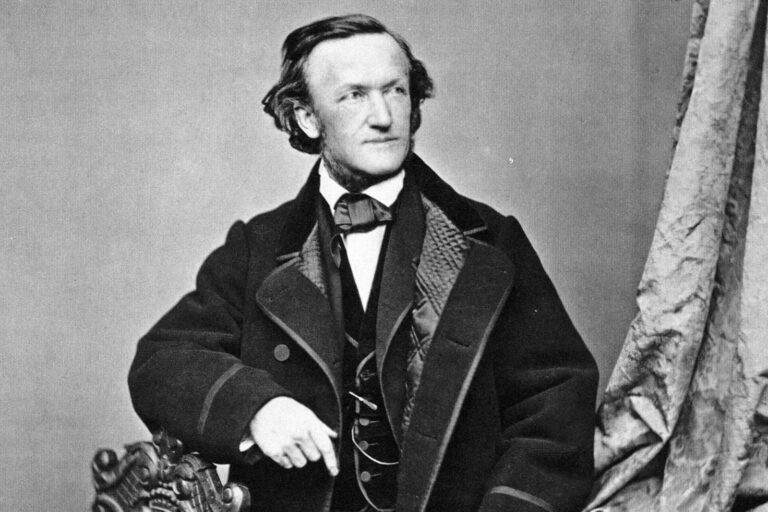
Richard Wagner · Romanticism
1813 – 1883
1882 · Music drama · Bayreuth
Tonality
Without a unique tone. Like every opera, it goes through a lot of tonalities. The prelude and the end are in the major bemol.
From the atril
Parsifal, released in Bayreuth in 1882, a few months before Wagner's death in Venice, is his last work. He called her. «sacred stage festival»and wanted him to be represented only in Bayreuth; that exclusivity remained for three decades. Even today there is a custom not to applaud at the end of the first act, because of its religious character.
I can INTEREST you.

The story revolves around the gentlemen who guard the Holy Grail. His king, Amfortas, suffers a wound that does not heal, caused by the wizard Klingsor, and only a «pure crazy»He who learns from compassion can cure him. That's Parsifal, a naive young man who resists the seduction of the mysterious Kundry and recovers the sacred spear. The music is slow, solemn and of a special light, with an orchestration in which the sound seems to float, designed for the acoustics of the covered moat of Bayreuth. The prelude, the music of transformation to the temple of the Grail and the «Enchantment of Good Friday» are pages of a unique beauty.
What to hear
- The prelude of the first act.
- The music of transformation to the temple.
- The «Enchantment of Good Friday».

