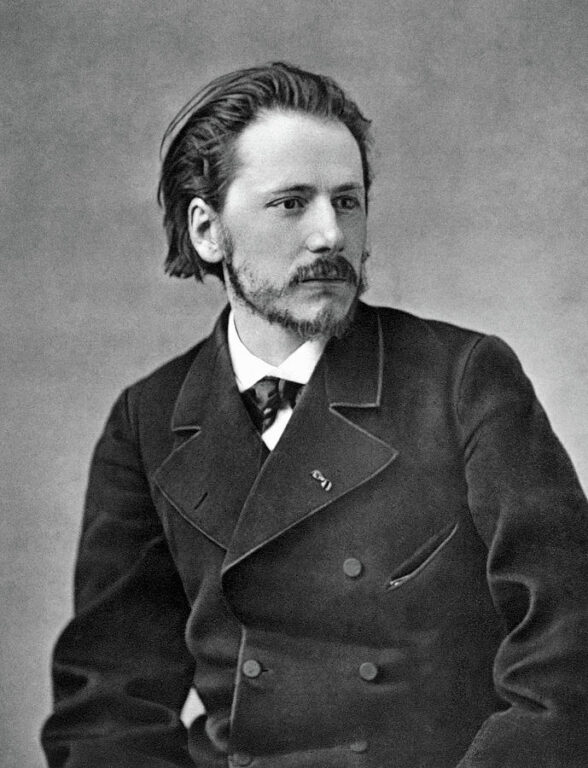
Jules Massenet · Romanticism
1842 – 1912
1910 · Heroic comedia · Opera of Monte-Carlo
Tonality
Without a unique tone. Like every opera, it goes through many tonalities along its aryan, chorus and scenes.
From the atril
Don Quichotte, premiered at the Opera of Monte-Carlo in 1910, is one of the last works of Massenet, written when he was already ill. It is inspired not directly by Cervantes, but by a French play that adapted it. The leading role was created by the great Russian bass Fiodor Chaliapin, which made him one of his most famous characters.
I can INTEREST you.

In this version, Don Quixote is in love with a flirt and mundane Dulcinea who sends him to recover a necklace stolen by bandits. He gets it with his goodness, but when he asks for marriage, she laughs at him. The opera ends with the death of the gentleman in the forest, accompanied by the faithful Sancho, in a scene of a touching tenderness. Massenet fills the Spanish score, with guitars, dances and serenades, and writes for the protagonist a music of great nobility. The interlude with cello alone, which evokes the melancholy of the gentleman, is a jewel.
What to hear
- The Spanish color of serenades and dances.
- The interlude with cello alone.
- Don Quixote's death next to Sancho.

