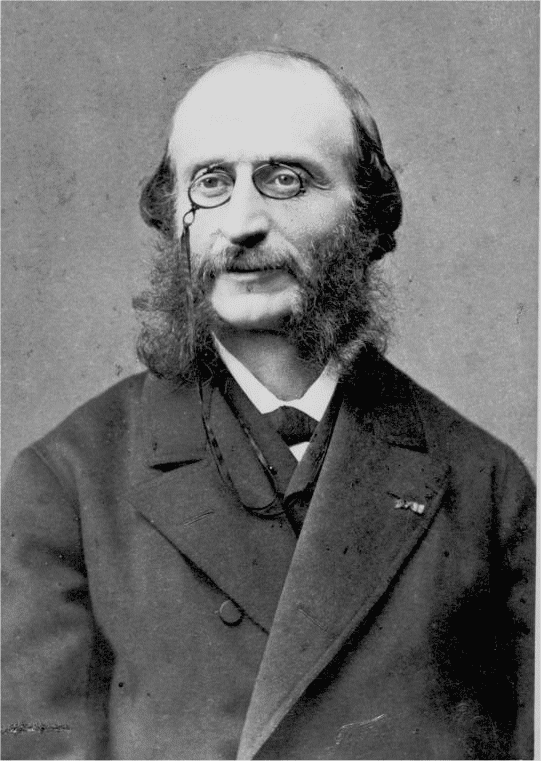
Jacques Offenbach · Romanticism
1819 – 1880
1866 · Opera · Paris, Théâtre du Palais-Royal
Tonality
Without a unique tone. Like every stage work, it goes through many tonalities throughout its numbers.
From the atril
For the first time Offenbach leaves aside the ancient gods and heroes and sets the Paris stage of his own time. With a libretto from Meilhac and Halévy, history starts in a train station: two idle young people, Gardefeu and Bobinet, pose as guides for a Swedish baron and his wife who have come to have fun in the capital, and they set up for them a world of false parties, raised in the disguise of aristocrats and endless dinners.
The music is a portrait of the city that danced without stopping at the gates of the 1867 Universal Exhibition: waltz, galops, catchy coals and a final that revolves like a night of a feud. The entry of the rich Brazilian who comes ready to spend his fortune in Paris is a number of pure energy, and the great end of the fourth act, with all the cast carried by the dance, is among the most contagious that he wrote. For musicians, the hard thing is to keep that glow unbounded.
What to hear
- The Brazilian.
- The musical portrait of the train station.
- The great dance ending.
Listen
THE PARISIENNE VIE. Opera by J. OFENBACH. Full version. Subtitles: FRANÇAIS - ENGLISH - DEUTSCH. · old _ 45
When you press the YouTube player will be loaded.

