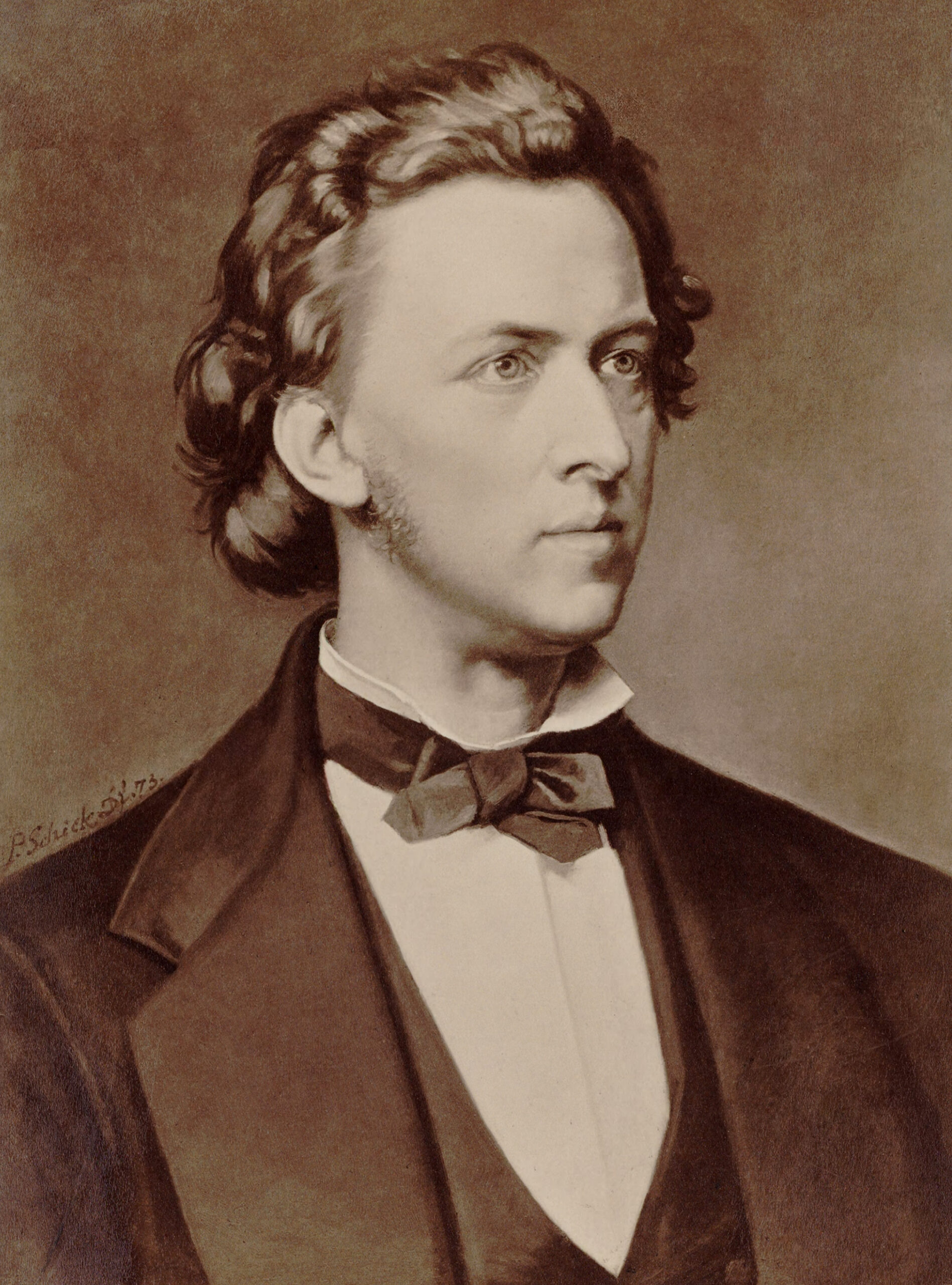
Frédéric Chopin · Romanticism
1810–1849
1829-1836 · Piano alone · Warsaw and Paris
Tonality
Without a unique tone. It's a collection of studies and everyone has his own.
From the atril
Before Chopin, a study was a technical exercise, useful but boring. With its two collections of twelve studies, op. 10, dedicated to Liszt, and op. 25, Chopin turned them into concert works. Each one works a specific problem, but never ceases to be real music. They're the Everest of all pianist.
From the keyboard, each studio is a different mountain. Op. 10 ° 1 requires the opening of the hand in huge arpegios; no. 3, known as «Sadness», is a canable melody of enormous beauty; # 12, the «Revolutionary», he throws to the left hand in a furious stream, written according to tradition after the fall of Warsaw in 1831. In op. 25, n ° 1 sounds like a wind harp, and n ° 11, «Winter wind»It's a storm of notes on a heroic subject. Dominating them takes a life, and there's always something to learn.
What to hear
- Op. 10 ° 3, «Sadness».
- Op. 10 ° 12, «Revolutionary».
- Op. 25 ° 11, «Winter wind».

