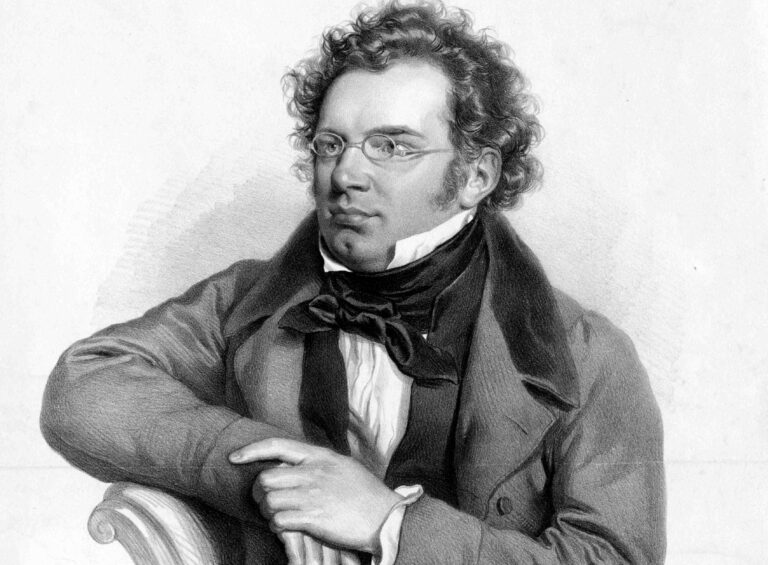
Franz Schubert · Romanticism
1797 – 1828
1827 · Piano alone · Vienna
Tonality
Without a unique tone. There are four impromptus: minor, My biggest bemol, major bemol sun and the major bemol.
From the atril
An impromptu is, in theory, a piece that sounds improvised, although these four are composed of extraordinary care. Schubert wrote them in 1827, the same year as Winterreise, and they are four very different characters that form a small cycle. They have become essential parts of every pianist.
The first one begins with a single note, a sun in fortissimo, followed by a naked melody, like a distant song in the rhythm of march. The second is a stream of quick three-ways in the right hand, which require lightness and regularity. The third, in the larger bemol sun, is a very long and serene melody on a undulating accompaniment, one of the most beautiful pages that can be played. The room alternates cascades of arpegios with a theme sung on the left hand. Four worlds in 25 minutes.
What to hear
- The lonely note that opens the first one.
- The serene melody of the third, in the big bemol sun.
- The arpegium waterfalls in the room.
Listen
Alfred Brendel - Schubert - Four Impromtus, D 899 · Classical Vault 1
When you press the YouTube player will be loaded.

