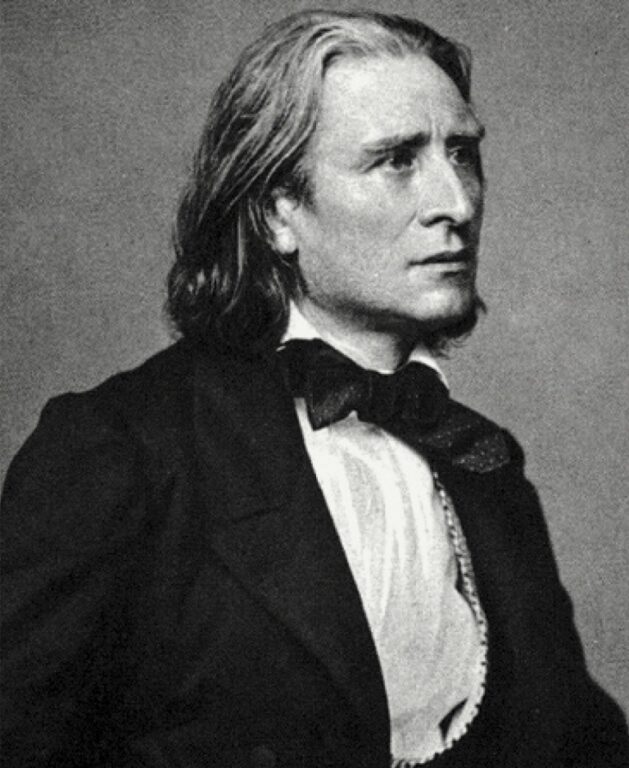
Franz Liszt · Romanticism
1811 – 1886
1857 · Symphony with male tenor and chorus · Weimar
Tonality
No tonality indicated in the title. His three movements portray Fausto, Margarita and Mefistopheles, each with its own tonal color.
From the atril
Inspired by Faust of Goethe and dedicated to Berlioz, who had discovered the work, this symphony is presented as «three character portraits»: Fausto, Margarita and Mefistopheles. Liszt finally added a male choir with a soloist tenor, about the last verses of the drama of Goethe, the famous Chorus mystius.
Since the orchestra, the first movement portrays Fausto with several themes that express his concern, his desire and his pride; the first is so chromatic and strange that he seems to announce the music of the 20th century. The second, Margarita, is a tenderness remnant, with an oboe that sings on the viola alone, one of Liszt's most delicate pages. And the third is great: Mefistopheles has no themes of his own, but rather deforms and ridicules Fausto's, with mockery rhythms and grotesque orchestration. In the end, the choir brings redemption.
What to hear
- Fausto's initial chromatic theme.
- Margarita's movement, with oboe and viola.
- Mefistopheles deforming Fausto's themes.

