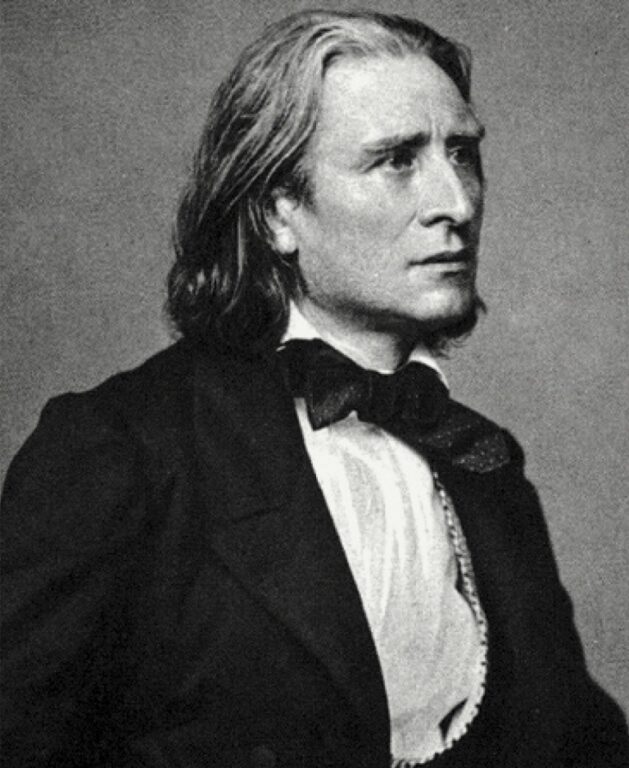
Franz Liszt · Romanticism
1811 – 1886
1854 · Symphonic poem · Weimar
Tonality
From the atril
Liszt invented the symphonic poem: an orchestral work in a single movement, inspired by a literary, pictorial or philosophical idea. The preludes is the most famous of the thirteen he wrote in Weimar. In the preface of the score he quotes a meditation of the poet Lamartine: life is only a series of preludes to that unknown song whose first note is death.
From the orchestra, the whole work is born of a three-note motif that appears at first on the strings, soft, as a question. That motive becomes a loving theme, a storm, a pastoral scene with wood and harp, and finally a triumphant march with all the metals at full lung. For tubes, trumpets and thrombons, the end is a feast. It is a rather great work, but of extraordinary orchestral effectiveness.
What to hear
- The reason for three notes at first.
- The pastoral scene with wood and harp.
- The triumphant march of the metals.
Listen
Franz Liszt: The Preludios - National Youth Symphony José de San Martín · National Youth Symphony Libertador San Martín
When you press the YouTube player will be loaded.

