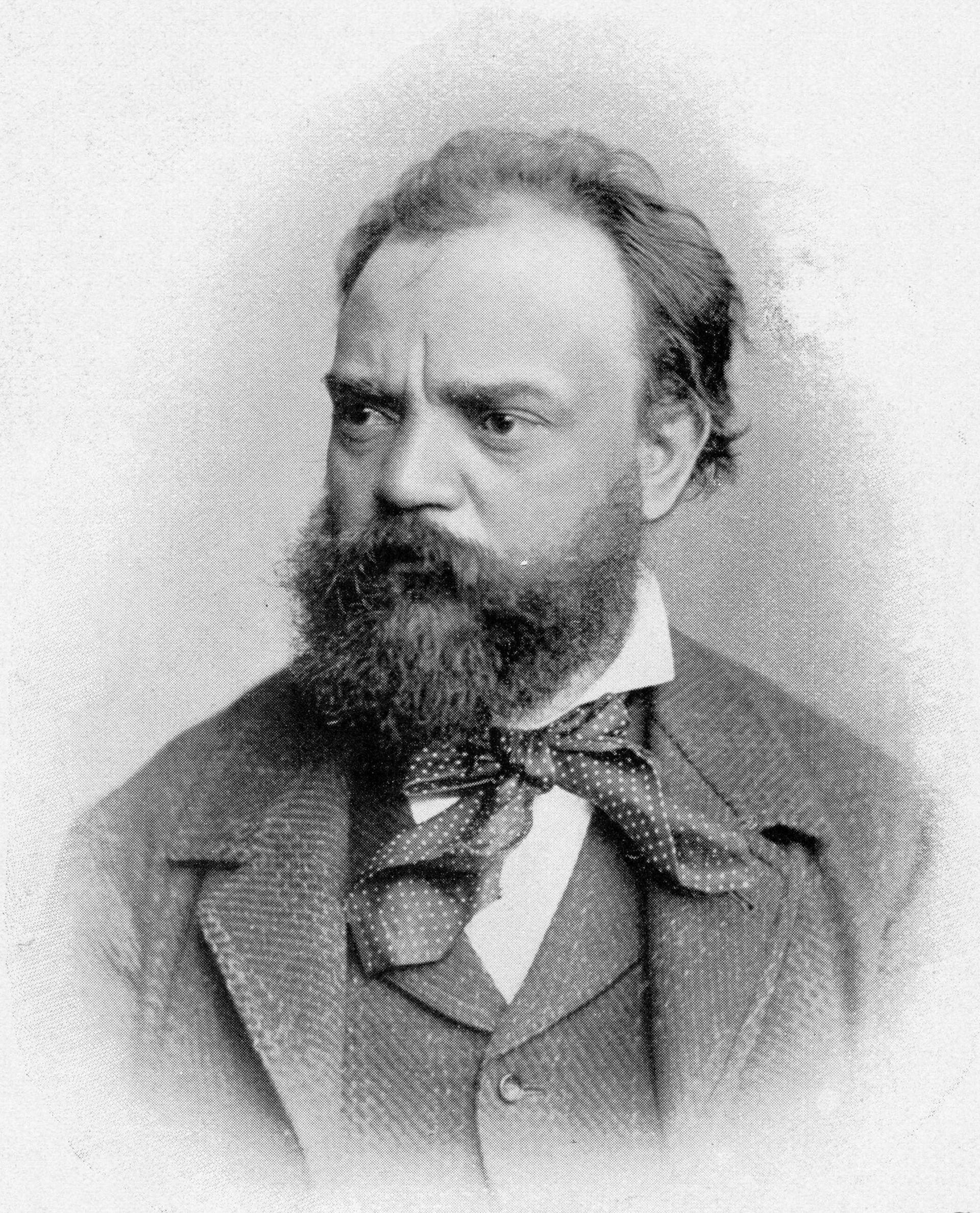
Antonín Dvorak · Romanticism
1841 – 1904
1875 · Rope Orchestra, my major · Prague
Tonality
From the atril
Dvorak wrote it in about 11 days of May 1875, a happy year: he had just been married, his first son was born and the Austrian State had granted him a scholarship to alleviate his poverty. All that is heard in the music. They are five movements for string orchestra, of a lyrism and a freshness that have made it one of the most beloved serenades of the repertoire, next to that of Chaikovski.
I can INTEREST you.

For a string orchestra it is pure happiness. The first movement begins with a soft canon between violins and cello, like a quiet conversation. They follow a melancholy waltz, a playful scherzo, a long hetto that is the most tender that Dvorak wrote and an energetic ending that, before ending, remembers the theme of the beginning. There are no passages of light: all is to sing together and listen to others.
What to hear
- The canon of the first movement between violins and cello.
- The waltz of the second movement, between elegance and nostalgia.
- The larghetto, a word-free love song.
Listen
Op. 22 - Antonin Dvorak · Symphony Orchestra TNCS
When you press the YouTube player will be loaded.

