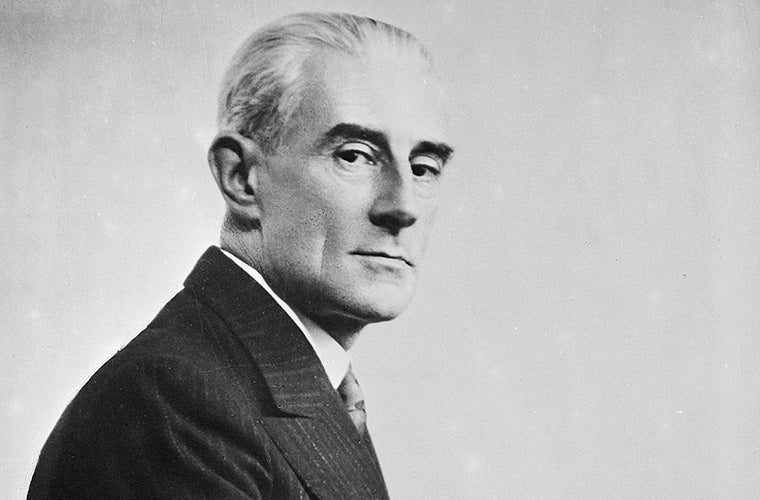
Maurice Ravel · Impressionism
1875 – 1937
1907 · Orchestra · Paris
Tonality
Without a unique tone. Its four parts go through several tonalities. The «Prélude à la nuit» is built on an obsessive motif of four descending notes.
From the atril
Ravel's mother was Basque and had been raised in Madrid, and she sang Spanish songs as a child. This connection with Spain is all over his work, and the Rapsodie spagnole, completed in 1907, was his first great orchestral work. Falla, who heard it in Paris, said it was more Spanish in spirit than many works by Spanish composers.
He's got four moves. The «Prélude à la nuit» It is built on a motif of four descending notes that is obsessively repeated on the cords with satico, creating a nocturnal and mysterious atmosphere. The «Malawi» is short and rhythmic; «Habanera»which comes from an earlier piece for two pianos, is slow and sensual. And the «Fair» final is a color explosion, with castanets, pandereta, xylophone and an orchestra unattended, interrupted in the center by a melancholic only of English corno. It is a dazzling orchestration work, which demands the orchestra precision and transparency in the pianissimi and glow in the Tutti.
What to hear
- The obsessive motive of «Prélude à la nuit».
- The «Habanera»slow and sensual.
- The color explosion of the «Fair».
Listen
Ravel: Rapsodie spagnole − hr-Samponieorchester − Pablo Heras-Married · hr-Sinfonieorchester - Frankfurt Radio Symphony
When you press the YouTube player will be loaded.

