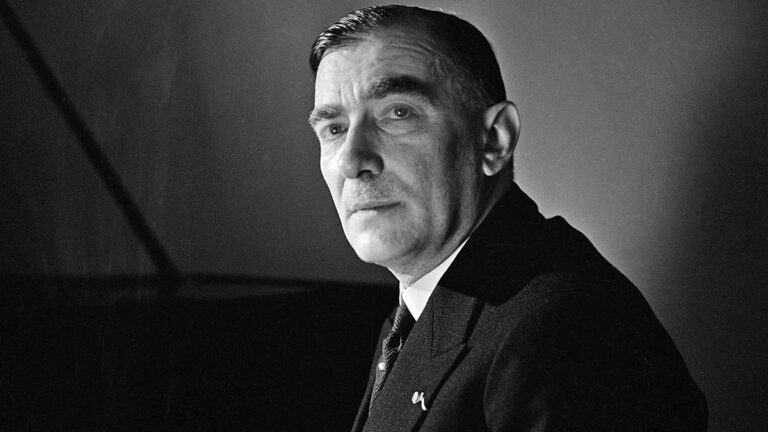
Karol Szymanowski · Impressionism
1882 – 1937
1926 · Solists, chorus and orchestra
Tonality
Without a unique tone. Its six parts go through several tonalities, with modal turns inspired by Polish popular music.
From the atril
After the sensual exotism of his youth works, Szymanowski turned to the roots of Polish music in the 1920s. Su Stabat Matercomposed in 1926, it is the most beautiful fruit of that turn: instead of the medieval Latin text, it uses a Polish translation of Józef Jankowski, so that the people could understand it, and it is inspired by popular religious singing and ancient polyphony.
The work, for soprano, contralto, baritone, chorus and orchestra, is divided into six short movements. Szymanowski defined it as a «peasant réquiem»: its simplicity is deliberate, with harmonies of manners, archaic air melodies and a transparent orchestration that allows the voices to breathe. The first movement, with the soprano on a soft accompaniment, has a touching purity, and in some passages the chorus sings with a collected intensity. Far from grandiosity, it is one of the most intimate and emotional sacred works of the 20th century, ideal for choirs looking for an unmoved repertoire.
What to hear
- The purity of the soprano in the first movement.
- The chorus-to-chorus passages.
- The harmonies archaic air manners.

