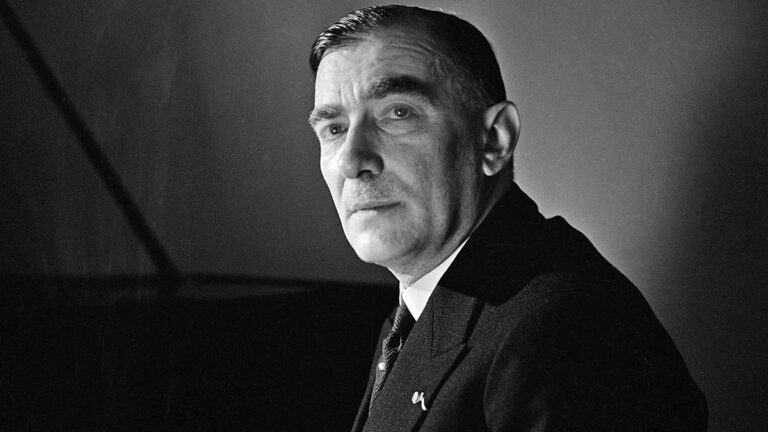
Karol Szymanowski · Impressionism
1882 – 1937
1926 · Opera · Warsaw
Tonality
Without a unique tone. Like every opera, it goes through many tonalities, with influences of Byzantine and eastern music.
From the atril
Krol Roger («King Roger»), released in Warsaw in 1926, is the masterpiece of Szymanowski and one of the great operas of the 20th century. The libretto, which he wrote with his cousin, the writer Jarosław Iwaszkiewicz, is set in the 12th century Sicily, the crucible of Greek, Arab and Norman cultures that had so fascinated the composer in his travels.
A mysterious shepherd comes to the court of King Roger II preaching a cult of beauty and pleasure. Queen Roxana and the people follow him, and the king himself, divided between reason and impulse, ends up attracted by him. In the end, the shepherd reveals himself as Dioniso, and Roger, only before the rising sun, raises a hymn to light. The opera is short, in three acts, and more static than dramatic, almost an oratory. The first act, in a Byzantine cathedral, begins with songs of Orthodox church; the second, in the palace, with the famous song of Roxana, an undulating melody of eastern air; and the third, in a ruined Greek theatre, culminates in the final anthem to the sun, of a dazzling luminosity.
What to hear
- The Byzantine songs of the first act.
- Roxana's song.
- Roger's final anthem in the sun.

