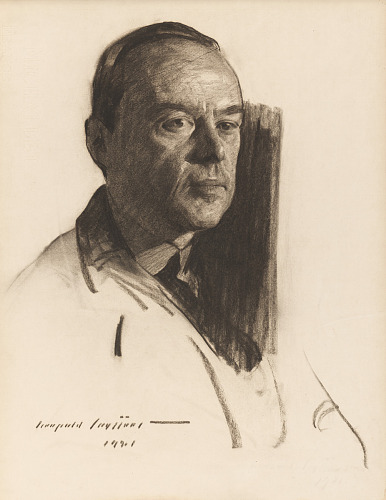
John Alden Carpenter · Impressionism
1876 – 1951
1913 · Cycle of songs · Chicago
Tonality
Without a unique tone. It's a cycle of songs and each has his own.
From the atril
In 1913, the Bengali poet Rabindranath Tagore received the Nobel Prize in Literature and his book Gitanjali («Lyrical ofrenda»), translated by himself into English, became a phenomenon in the West. That same year Carpenter, who had met Tagore in Chicago, put music to six of his poems in a cycle for voice and piano, later orchestrated.
The poems, of a serene mysticism, speak of the relationship of the soul with the divine, of light, of singing and of death as a return. Carpenter wraps them in harmonies of clear French influence, with nocturnal chords, exotic scales and a piano of soft and resonant colors, close to Debussy. The vocal line is lyrical and flexible, very attentive to the rhythm of the poetic prose. The last song, «Light, my light», is the best known and was much sung in the American recitals of the time. It is an ideal cycle to discover American impressionism.
What to hear
- The harmonies of French influence.
- The flexible vocal line on the Tagore prose.
- The final song, «Light, my light».

