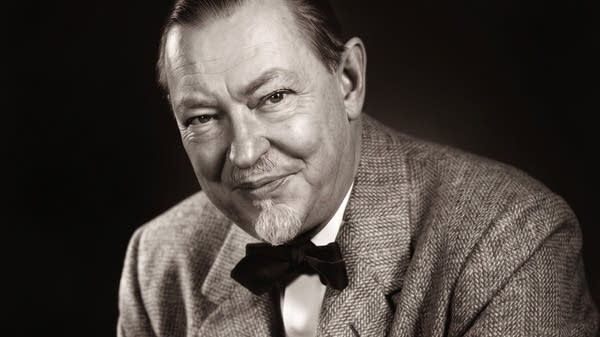
Howard Hanson · Impressionism
1896 – 1981
1943 · Symphony · Boston
Tonality
No tonality indicated in the title. Their four movements bear names of parts of the mass of the deceased.
From the atril
Hanson wrote his Fourth Symphony in memory of his father, and subtitled it. «Réquiem». He premiered it himself with the Boston Symphony in late 1943, and the following year he received the Pulitzer Music Prize, the second to be awarded in that category.
There are no voices: it is a mass of the dead without words. Each of its four movements bears the name of a part of the Latin réquiem —Kyrie, Requiescat, Dies irae and Lux aeternally— and translates its character into the orchestra. The Kyrie is dramatic and tense; the Requescat, a lament of high tenderness strings; the short and fierce irae Dies, with relentless metals and percussion. The end, «Lux aeterna», is the heart of the work: a serene music, which is gradually raised to the light, like a peaceful farewell. It is more concentrated and less exuberant than the Second, and for many Hanson's deepest symphony.
What to hear
- The Requiscat, I'm sorry for strings.
- The Iae Dies, short and fierce.
- The end, «Lux aeterna».

