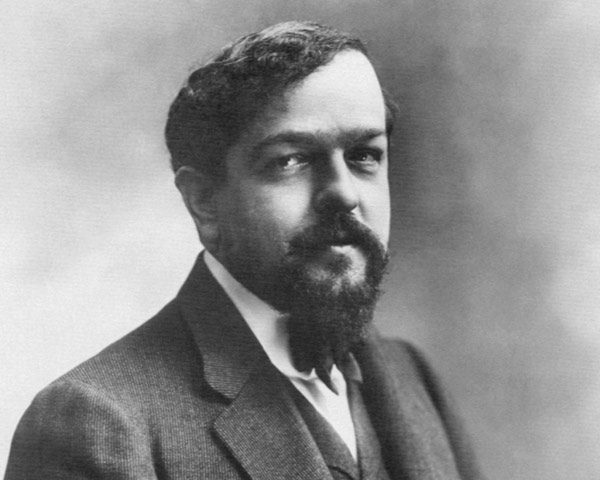
Claude Debussy · Impressionism
1862 – 1918
1890 / 1905 · Piano alone · Paris
Tonality
Without a unique tone. It's four pieces and each has his own. The famous Lune Clair is in major.
From the atril
Debussy began it in 1890 and did not publish it until 1905, thoroughly reviewing it. These are four pieces that evoke the world of the gallant parties of the 18th century and the common dell'arte, with its Bergamo masks, through the poems of Verlaine: Prélude, Menuet, Lune Clair and Passepied. He is the young Debussy, who still looks at the ancient dances but is already finding his voice.
Lune Clair is certainly one of the most famous piano pieces that exist, and for the pianist is a test of subtlety rather than technique. The initial chords have to emerge from silence, almost without attack, and the pedal must create a sound mist without erasing harmony. The central section, with its undulating arpegios, is like the moonlight reflected in the water. The other three pieces, with their archaizing grace, deserve equal attention.
What to hear
- The initial chords of Lune Clair, rising from the silence.
- The undulating arpegios of its central section.
- The archaizing air of Menuet and Passepied.
Listen
Lang Lang - Debussy: Suite bergamasque, L.75: III. Lune Clair · Deutsche Grammophon - DG
When you press the YouTube player will be loaded.

