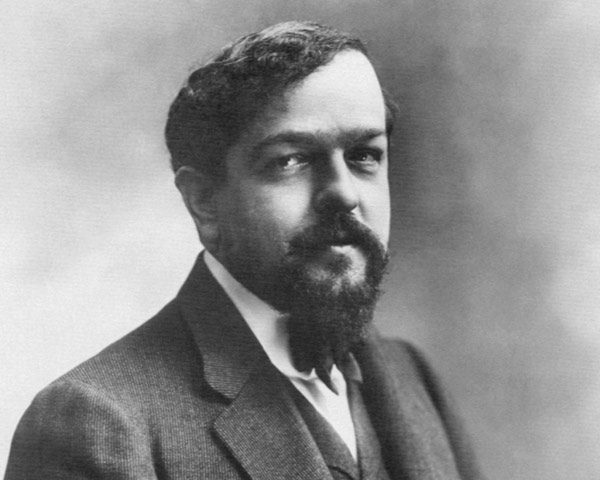
Claude Debussy · Impressionism
1862 – 1918
1905 · Three symphonic sketches · Paris
Tonality
Without a unique tone. There are three symphonic sketches that go through several tonalities, with abundant use of the scale of whole tones and pentatonic.
From the atril
Debussy loved the sea and came to say that if he had not been a musician he would have been a sailor. He wrote The mer much far from the coast, in Burgundy, and finished it in Eastbourne, in front of the Channel of the Mancha. For the cover of the score he chose the famous wave of Hokusai. There are three movements: From dawn to noon on the sea, Wave games and Dialogue of the wind and the sea.
Since the orchestra, it is one of the most fascinating and difficult works to play. There is no literal description, but a music in constant transformation, such as the sea itself: motifs that are born, fragmented and dissolved. At the end of the first movement, a metal coral announces the fullness of noon. Wave games is a prodigy of lightness, with flashes of harp, celesta and glockenspiel. The third movement, with its final tempest, is one of the most powerful orchestral pages of its century.
What to hear
- The metal coral at the end of the first movement.
- The flashes of Wave games.
- The storm of Dialogue of the wind and the sea.

