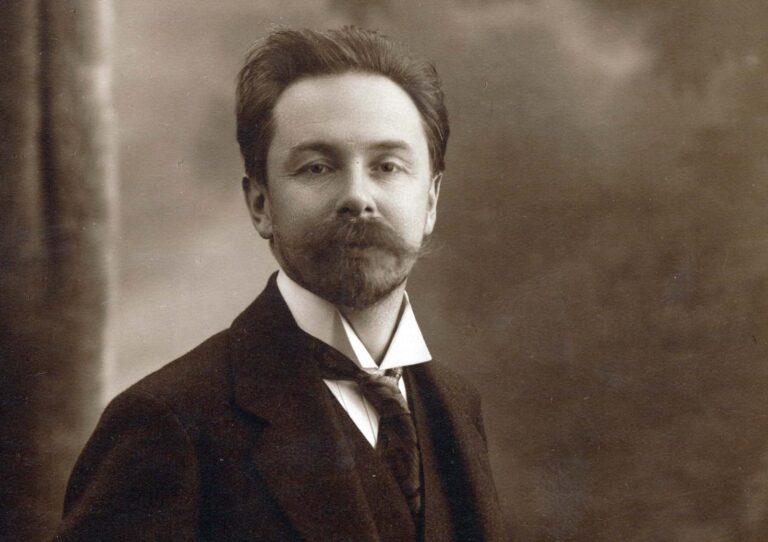
Alexander Scriabin · Impressionism
1872 – 1915
1894 - 1895 · Piano alone · Moscow
Tonality
Without a unique tone. It's 12 studies and everyone has his own. The most famous, # 12, is in less.
From the atril
Scriabin wrote these twelve studies with just over twenty years, a few years after he injured his right hand for overpractice. They follow the model of Chopin, whom he venerated, but with even denser writing: constant polyrhythmias, huge jumps, chords that fill the entire keyboard. They are technical studies, but especially little passionate poems.
For a pianist they are a serious challenge. Almost all of us have to play two different rhythms at once, three against four or five against three, without the music playing mechanical. The most famous is the last, No. 12 in minor re-sustained, a storm of octaves and leaps from the left hand with a heroic melody: Horowitz made it one of his favorite beets. Nº 11, in a minor bemol, is instead a slow and melancholic melody of an almost Russian beauty.
What to hear
- # 12 in minor, tempestuous and heroic reheld.
- # 11, a slow melancholic melody.
- The polyrhythms, which make the piano sound like it's breathing.
Listen
Scriabin: Piano Sonata No. 8, Op. 66 · Roberto Szidon
When you press the YouTube player will be loaded.

