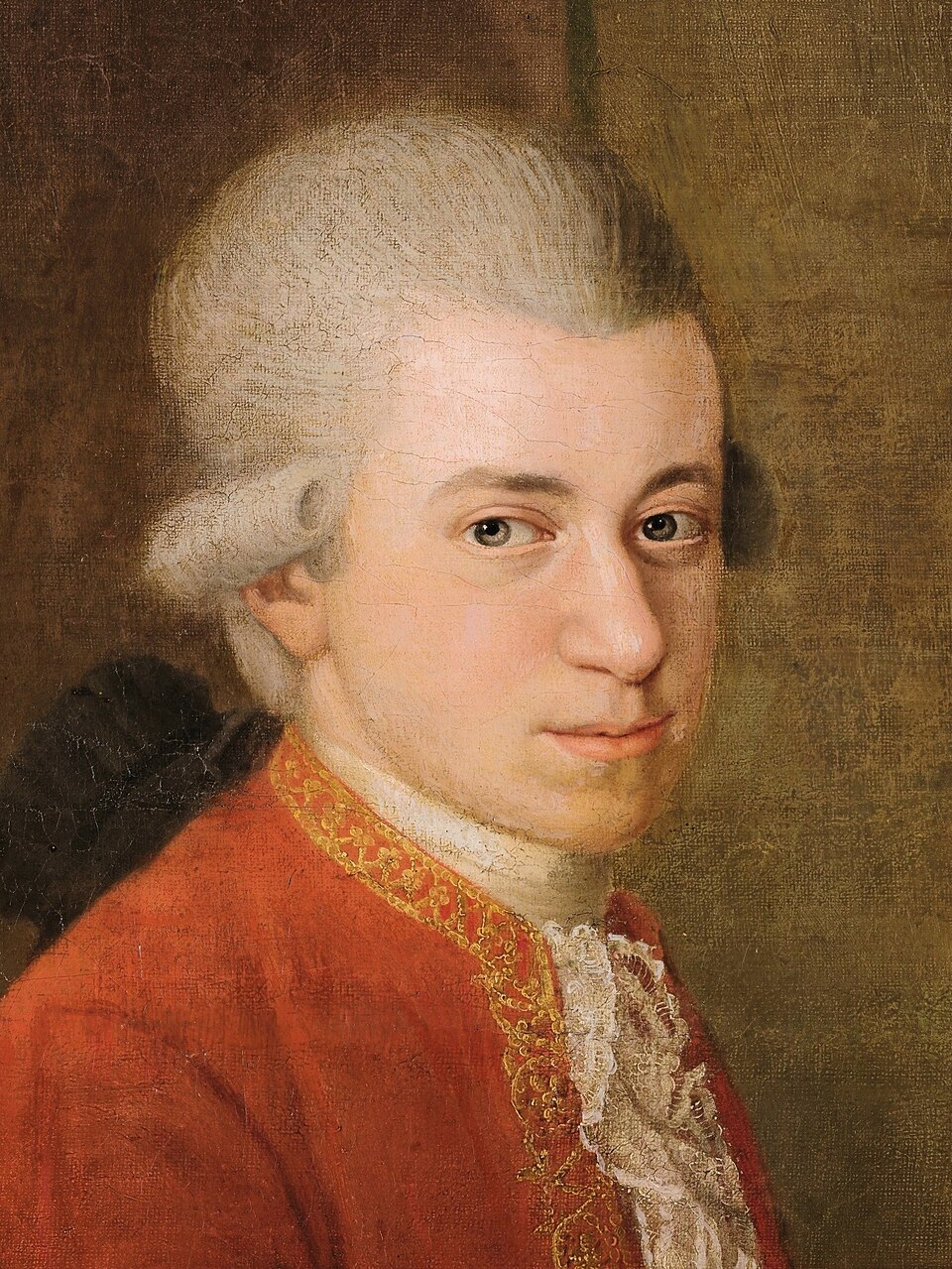
Wolfgang Amadeus Mozart · Classification
1756 – 1791
1791 · Singspiel · Vienna
Tonality
Without a unique tone. Like every opera, it goes through many tonalities along its ari and ensembles. The overture is in My biggest bemol, a tonality associated with masonry.
Instruments
- 2 flutes (one also flautin)
- 2 oboes
- 2 clarinet and 2 corni di bassetto
- 2 fages
- 2 tubes
- 2 trumpets and timbals
- 3 thrombons
- Glockenspiel (the magic bells of Papageno)
- Rope (violins, violas, cello and contrabajes)
From the atril
The magic flute, released in September 1791 in a popular theatre outside Vienna, a few weeks before Mozart's death, is a singspiel: an opera in German with spoken dialogues. The libretto is by Emanuel Schikaneder, an entrepreneur of the theatre, who also played the role of the papageno bird. It was an immediate success and has not ceased to be represented.
Prince Tamino, accompanied by Papageno, must rescue Pamina, daughter of the Queen of the Night, who is in the power of the wise Sarastro. But soon he finds that Sarastro is the good and the Queen the evil, and that he must overcome a series of trials to achieve wisdom. The work is full of symbols of the masonry, to which Mozart and Schikaneder belonged. Its mixture of fairy tales, popular comedy and spiritual depth is unique: the simple songs of Papageno, the pyrotechnics of the Queen of the Night, with its famous acute fa, and the solemn and serene music of Sarastro and his priests live together. It is the ideal opera to discover classical music at any age.
What to hear
- The Aria of the Queen of the Night «Der Hölle Rache».
- The Papageno songs.
- Sarastro's solemn music.
Listen
💥 Mozart - La Flute Ma'gica, KV 620 (COMPLETA) 🎶 · Neville Goddard
When you press the YouTube player will be loaded.

