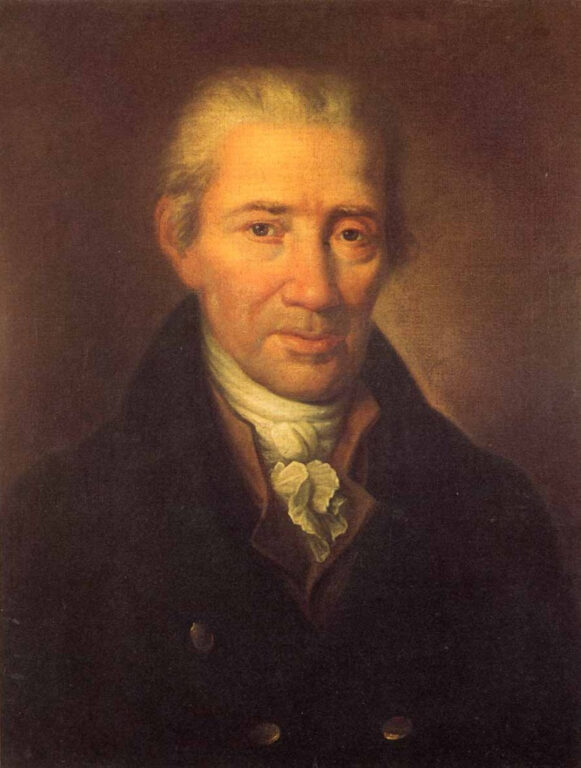
Johann Georg Albrechtsberger · Classification
1736 – 1809
Decent of 1760 · Guimbarda, mandora and cords
Tonality
Without a unique tone. There are several concerts and each has his own, often chosen according to the note in which the guimbarda was tuned.
Instruments
- Guimbarda (mouth harp)
- Mandora
- Row
From the atril
Few would expect to find in the catalogue of Beethoven's severe counter-point master some concerts for guimbarda, that small metal instrument that is placed between the teeth and made vibrate with the finger, while the mouth acts as a resonance box. Albrechtsberger wrote several, probably for a virtuous of his surroundings in Melk.
In these works the guimbarda dialogue with the mandora, a small lute very popular in Austria, and with the ropes. Each guimbarda only gives a fundamental note, on which harmonics are obtained by changing the shape of the mouth, so the concerts move in a simple harmony. The result is a metallic and buzzing sound, surprising and full of charm, with a rustic air that contrasts with the elegance of the orchestra. They are a delicious rarity, which always starts smiles in concert.
What to hear
- The buzzing sound of the guimbard.
- The dialogue with the mandate.
- The contrast between the rustic and the courtesan.

