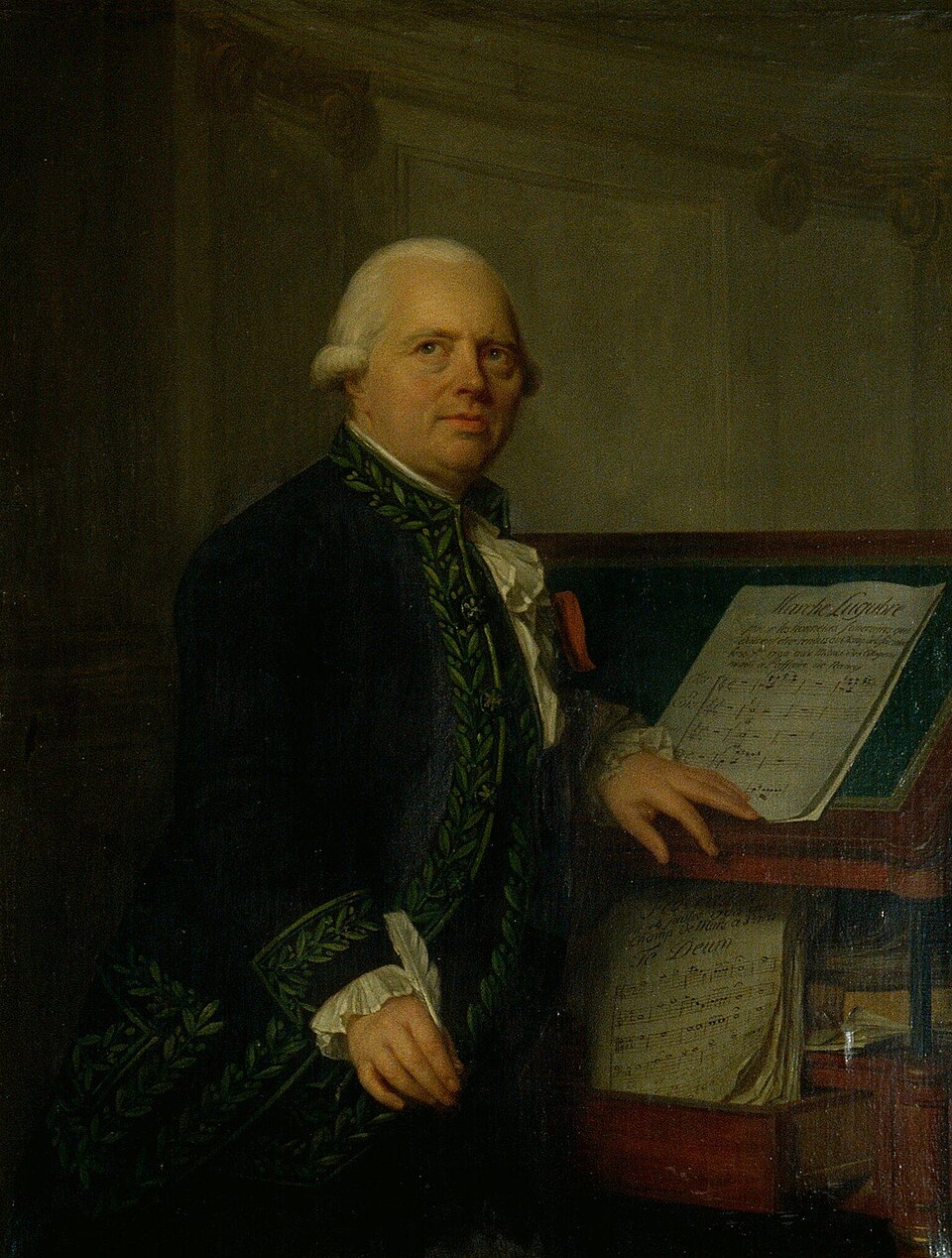
François-Joseph Gossec · Classification
1734 – 1829
1790 · Wind band · Paris
Tonality
No tonality indicated in the title. It is a funeral march in a minor way, with silences and redoubles that give it a very dramatic character.
Instruments
- Wind band
- Tambor with satin
- Tam-tam (one of its first uses in Western music)
From the atril
This funeral march was written for a ceremony in honor of soldiers killed in 1790 and later played in many solemn funerals of the Revolution. It is a short piece for band of winds and percussion, but it had a great influence on the solemn funeral march of the revolutionary era, a genre whose echo has been wanted to be heard even in the Heroica from Beethoven.
For those who play in a band, it's a very impressive piece. Gossec plays with the silences: phrases that are abruptly interrupted, breaks that leave the air on hold, like a courtship that stops. The satin drums mark the slow step, and between the percussion is the tama-tam, the eastern gong, in one of its first uses in Western music. His serious and mysterious resonance gives the march an almost overwhelming air of mourning.
What to hear
- The silences that interrupt the sentences.
- The tama-tam.
- The comparison with the funeral march of the Heroica.

