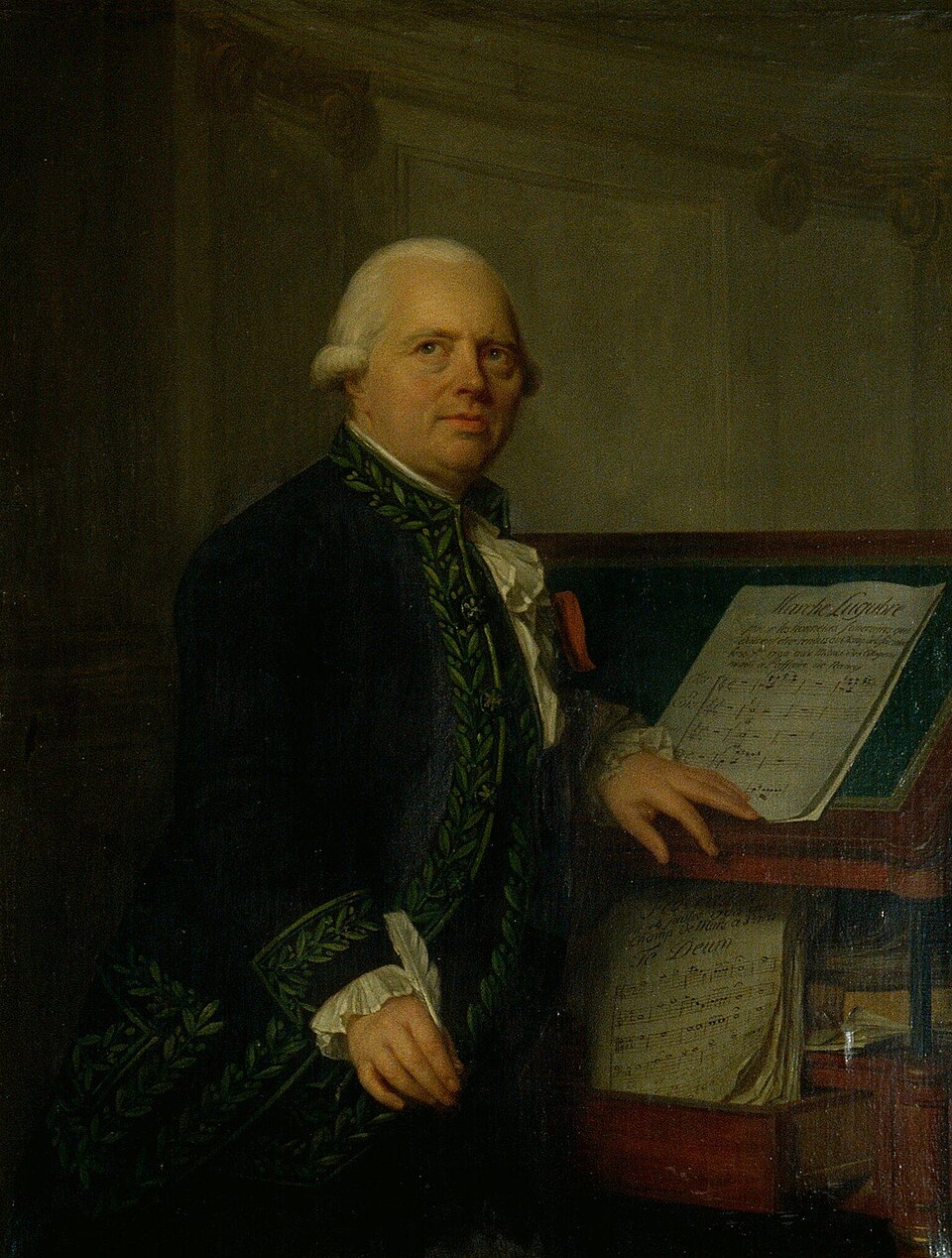
François-Joseph Gossec · Classification
1734 – 1829
1760 · Réquiem · Paris
Tonality
Without a single tone indicated in the title. It is a mass of the deceased in several sections, within a general climate in a smaller way.
Instruments
- Orchestra: wood, metals, timbals and rope
- Set of off-stage winds in the «Tuba mirum»
From the atril
Gossec was twenty-six years old when he premiered this mass of the deceased in Paris, and caused a feeling. It was a work of great dimensions, with soloists, choir and orchestra, and a dramatism that announced the romantic taste for the great. It was played many times in the following decades.
The most famous moment is the Tuba mirum, the text on the trumpet of the Final Judgment. Gossec placed a group of wind instruments separate from the rest of the orchestra, so that the call sounded as coming from afar, a spatial effect that Berlioz would take back in his own Réquiem. From the atril, this passage impresses, but the whole work has pages of great strength, with solemn chorus and dramatic contrasts between fear and supplication.
What to hear
- The Tuba mirumwith the far winds.
- The solemn chorus of Dies irae.
- The comparison with the Réquiem de Berlioz.

