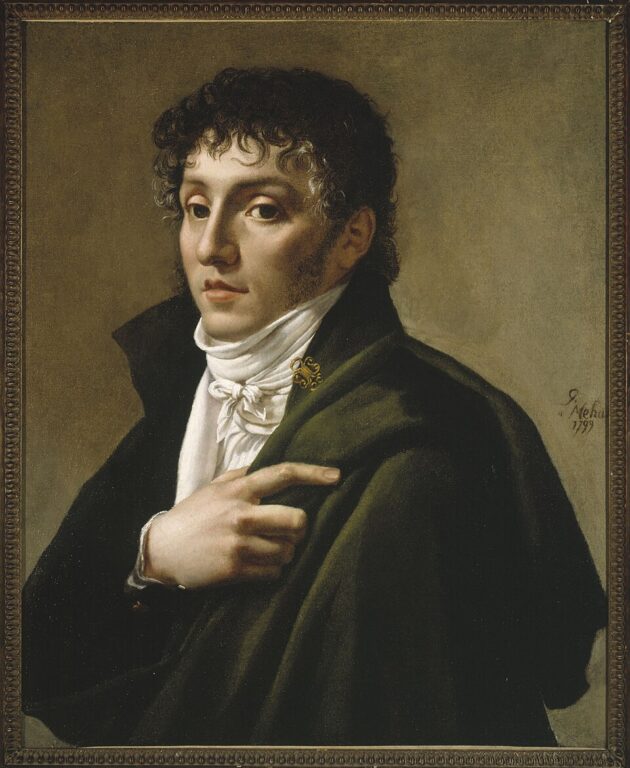
He-Nicolas Méhul · Classification
1763 – 1817
1806 · Opera in an act · Opéra-Comique, Paris
Tonality
Without a unique tone. Like every opera, he goes through many tonalities throughout his scenes, arias and chorus.
Instruments
- No violins: the sharp rope is carried by the violas, to give the work a somber color and «osianic»
- Cigarettes
- Wood, metals and timbals
From the atril
At the beginning of the 19th century, Europe as a whole was fascinated by the poems of Ossian, a so-called medieval Scottish bard whose verses, actually written by James Macpherson, evoked brumas, warriors and wild landscapes. Napoleon was a great admirer, and Méhul wrote this opera in an act set in that Nordic and melancholic world.
Its most famous feature is one of the great orchestral experiments of the time: Méhul completely suppressed the violins and entrusted the most acute part of the rope to the violas, to get a dark and veiled color that evoked the fissures of Scotland. They say that Grétry, after the rehearsal, said he would have given anything to hear a rope from me. For those who play the viola is an unusual honor. In addition, you can hear a bard accompanied by harp, a color that anticipates Romanticism.
What to hear
- The dark color of an orchestra without violins.
- You make them like an acute voice of the rope.
- The bardo's song with harp.

