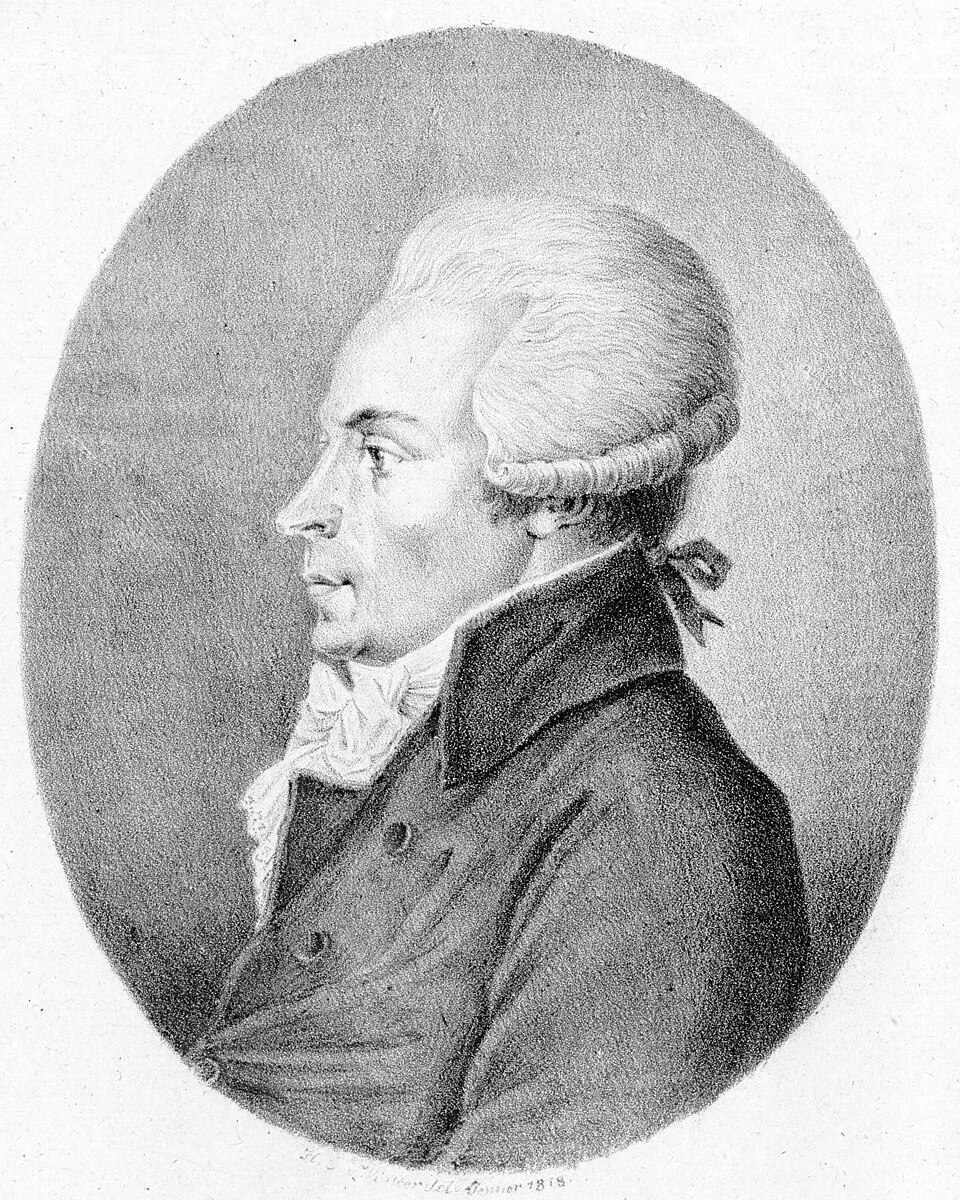
Antonio Rosetti · Classification
c. 1750 - 1792
c. 1775 - 1792 · Natural Trompa and orchestra · Wallerstein and Ludwigslust
Tonality
Without a unique tone. There are several concerts and each one has his own, almost always in comfortable tones for the natural tube, like My biggest bemol or My major.
Instruments
- Natural soloist trompa
- Orchestra: rope, with oboes (or flutes) and tubes
From the atril
Rosetti worked for years in the court of Oettingen-Wallerstein, whose orchestra had some of the best trumpists in Europe, and wrote for them a series of concerts that are, together with Mozart's, the core of the instrument's classic repertoire. They are designed for the natural tube, without valves, in which the interpreter changes the notes by putting his hand in the pavilion.
Any trumpet knows them, and he knows they're not easy. Rosetti exploits the serious record and the great jumps with nature, and writes slow movements that require a very controlled canable line, in which the hand-covered notes give a veiled and mysterious color. The final rondons usually have a hunting air, the origin of the instrument. Listening to them in a natural tube is to discover a palette of nuances that the modern tube tends to match.
What to hear
- The slow movements, with their notes covered in mysterious color.
- The final runners with hunting grounds.
- The difference in color between one interpretation with a natural tube and another with a modern tube.

