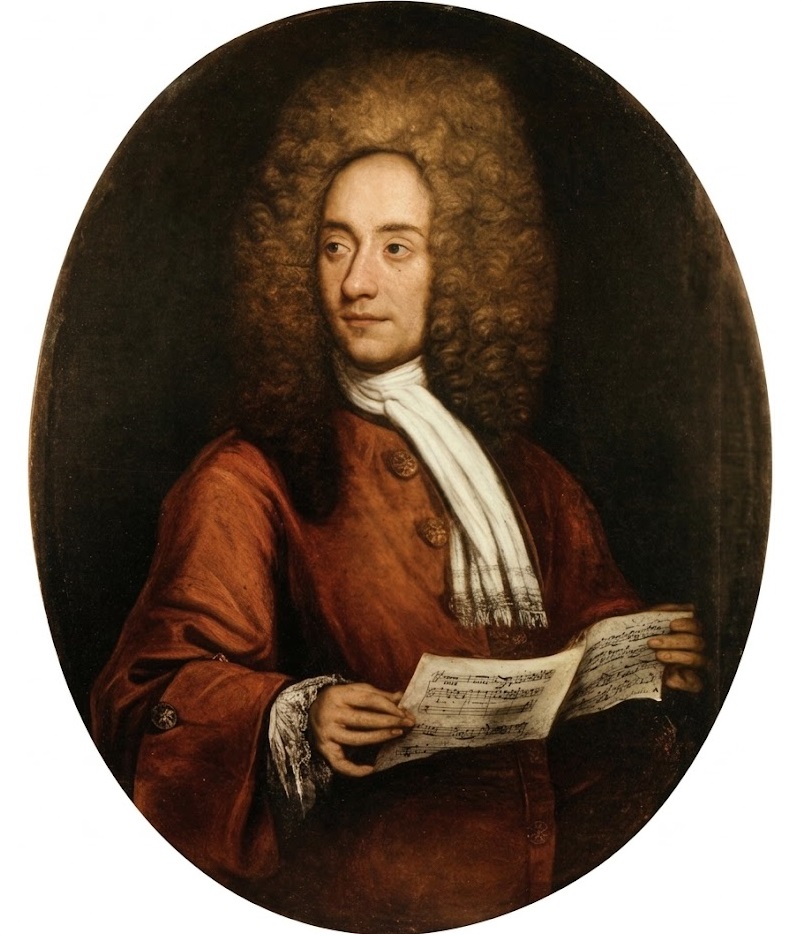
Tomaso Albinoni · Baroque
1671 – 1751
About 1711 · Continuous violin and bass · Venice
Tonality
Without a unique tone. It's a collection of twelve sonatas and each has his own.
Instruments
- Violin
- Continuous bass (violone and key)
From the atril
The twelve sonatas for violin and continuous bass of op. 6, published around 1711, bear the title of Trattenimenti harmonici per cameraI mean, «harmonic camera entertainments». They were designed to play in the halls of the nobility and the bourgeoisie, and for the enjoyment of the amateurs, not for the church.
Each sonata has four movements, alternating slow and fast, in the way of Corelli, but with a more modern and melodic language. The slow movements are cantabile and offer the violinist an opportunity to adorn with freedom, as was done at the time. The rapids have a living rhythmic impulse and often a dancing character. The writing is idiomatic and elegant, with moderate difficulty, making it a very useful repertoire for advanced students of baroque and modern violin. For the listener, they are a sample of the melodic grace of Albinoni, to whom the contemporaries especially admired for their melodies.
What to hear
- The slow movements of the Cantabile.
- The free ornament of the violinist.
- The dancing character of the rapids.
Listen
Albinoni Tomaso - Opus 6: Trattenimenti Armonici 12 Sonatas - Part 2 No 7 to No 12 · Jean- Pierre SILVESTRE
When you press the YouTube player will be loaded.

