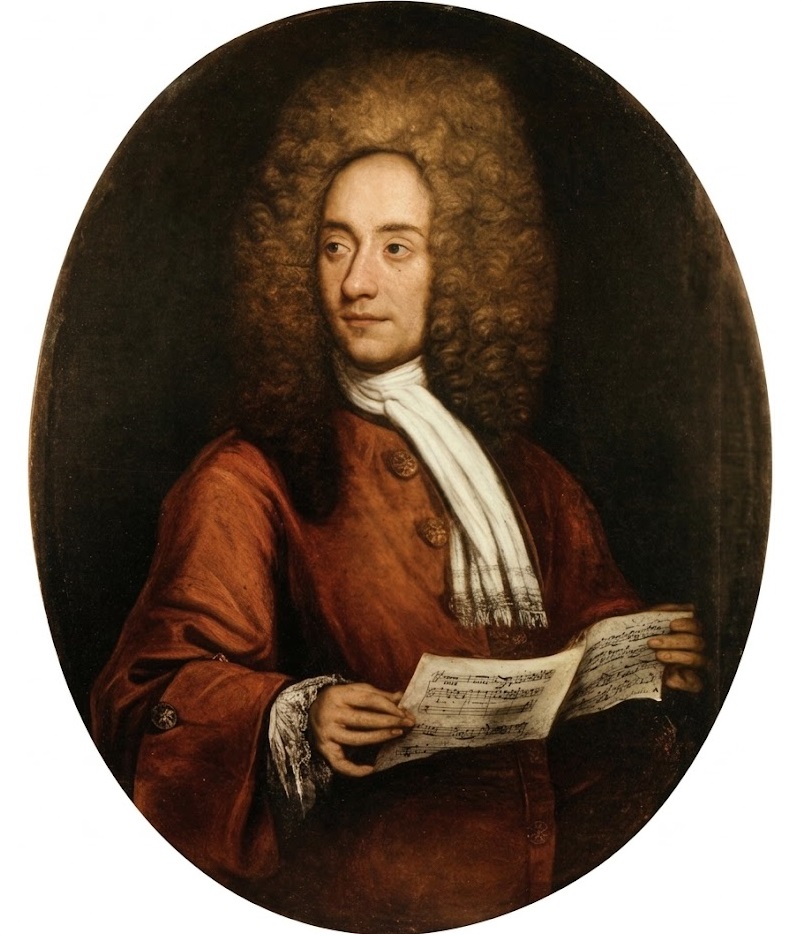
Tomaso Albinoni · Baroque
1671 – 1751
1715 · Concerts for oboe · Amsterdam
Tonality
Without a unique tone. It's a collection of twelve concerts and each has his own.
Instruments
- 1 or 2 solo oboes (in eight of the twelve concerts)
- Solo violin (in others)
- Rope (violins, violes, cello)
- Continuous low
From the atril
The twelve concerts of op. 7, published in Amsterdam in 1715, are historic: Albinoni was the first Italian composer to publish concerts for oboe solista. Of the twelve, four are for an oboe, four for two oboes and four only for rope. The oboe was then a relatively new instrument in Italy, coming from France.
Albinoni, who also wrote operas, treats the oboe as a voice of soprano: it gives it long and canable melodies, with phrases that respect the breathing of the interpreter, instead of the violin passages that other composers moved to the wind instrument. In the concerts for two oboes, soloists dialogue and imitate with grace. The slow movements, of a serene beauty, are especially appreciated. This collection, along with op. 9, is the basis of the Baroque repertoire for oboe and one of the great legacies of Albinoni. For the oboists it is a reference repertoire, grateful and very musical.
What to hear
- The oboe treated like a voice.
- The concert dialogue for two oboes.
- The slow moves.

