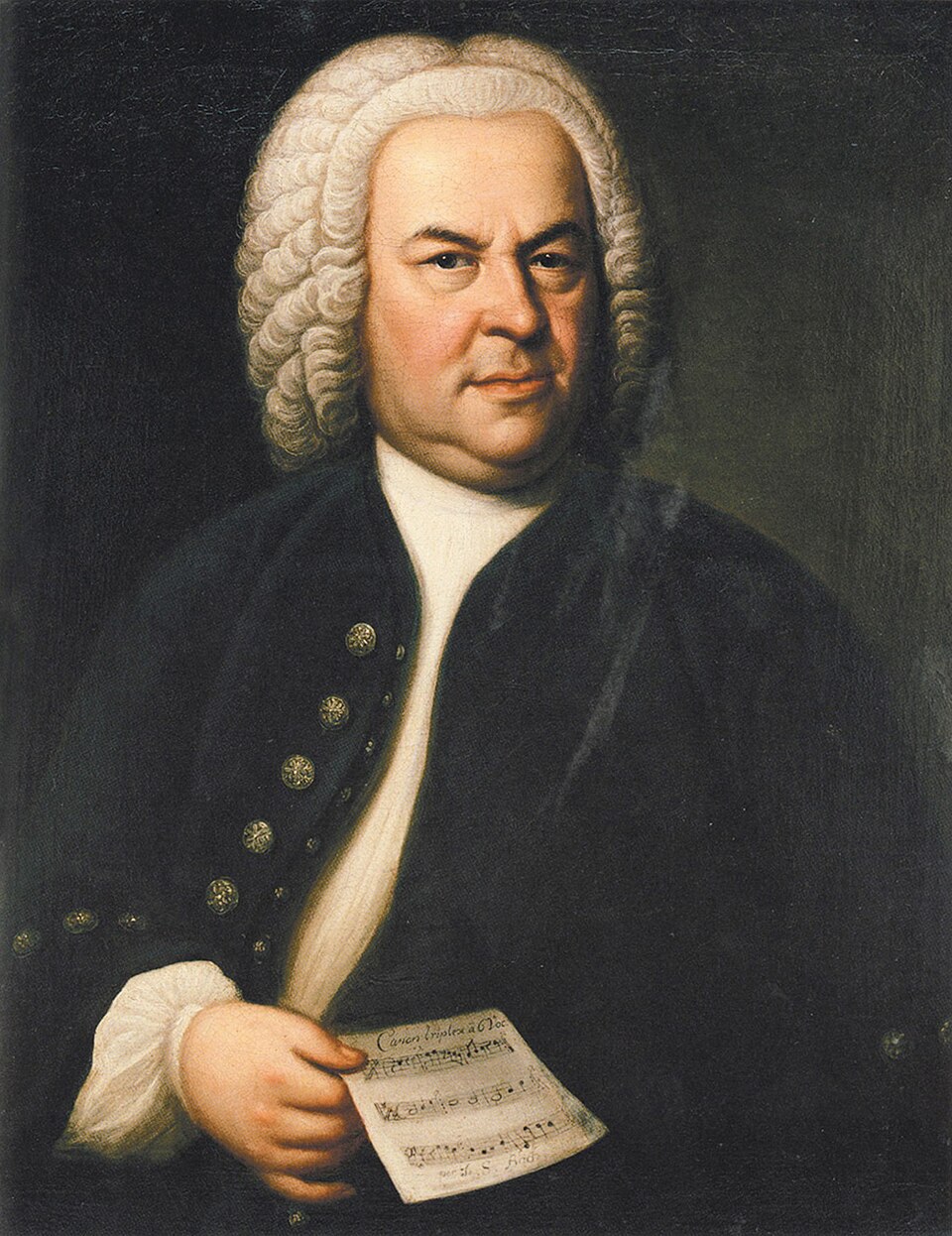
Johann Sebastian Bach · Baroque
1685 – 1750
1734 · Oratory in six cantons · Leipzig
Tonality
Without a unique tone. It's six cantons and each has his own. The first, «Jauchzet, frohlock!», open in major with trumpets and timbals.
Instruments
- 3 trumpets and timbals
- 2 hunting tubes
- 2 cross flutes
- Oboes, oboes d'amore and oboes da caccia
- Rope (violins, violes, cello)
- Continuous bass (organ, fagot and violone)
From the atril
The Christmas Oratory was not designed to be heard at once: it is six cantons, each for one day of the Christmas parties of 1734-1735, from Christmas day to Epiphany. Together they narrate the history of Jesus' birth, the worship of the pastors and the arrival of the Magi.
Bach reused much of the music of profane cantons he had written for the court of Saxony, adapting it to the new texts, a common practice at the time. The result is bright and festive: the first cantata starts with a double of timbales and a retired chorus with trumpets, «Jauchzet, frohlocket». The second includes a pastoral symphony with oboes that evoke the pastors. It is Bach's most cheerful and accessible coral work, perfect to discover his vocal music.
What to hear
- The timbals and trumpets of the initial choir.
- The pastoral symphony of the second cantata.
- The final choir of the sixth cantata, with trumpets.
Listen
Bach: Christmas Oratory, BWV 248 | St. Thomas Choir & Leipzig Gewandhaus Orchestra · DW Classical Music
When you press the YouTube player will be loaded.

