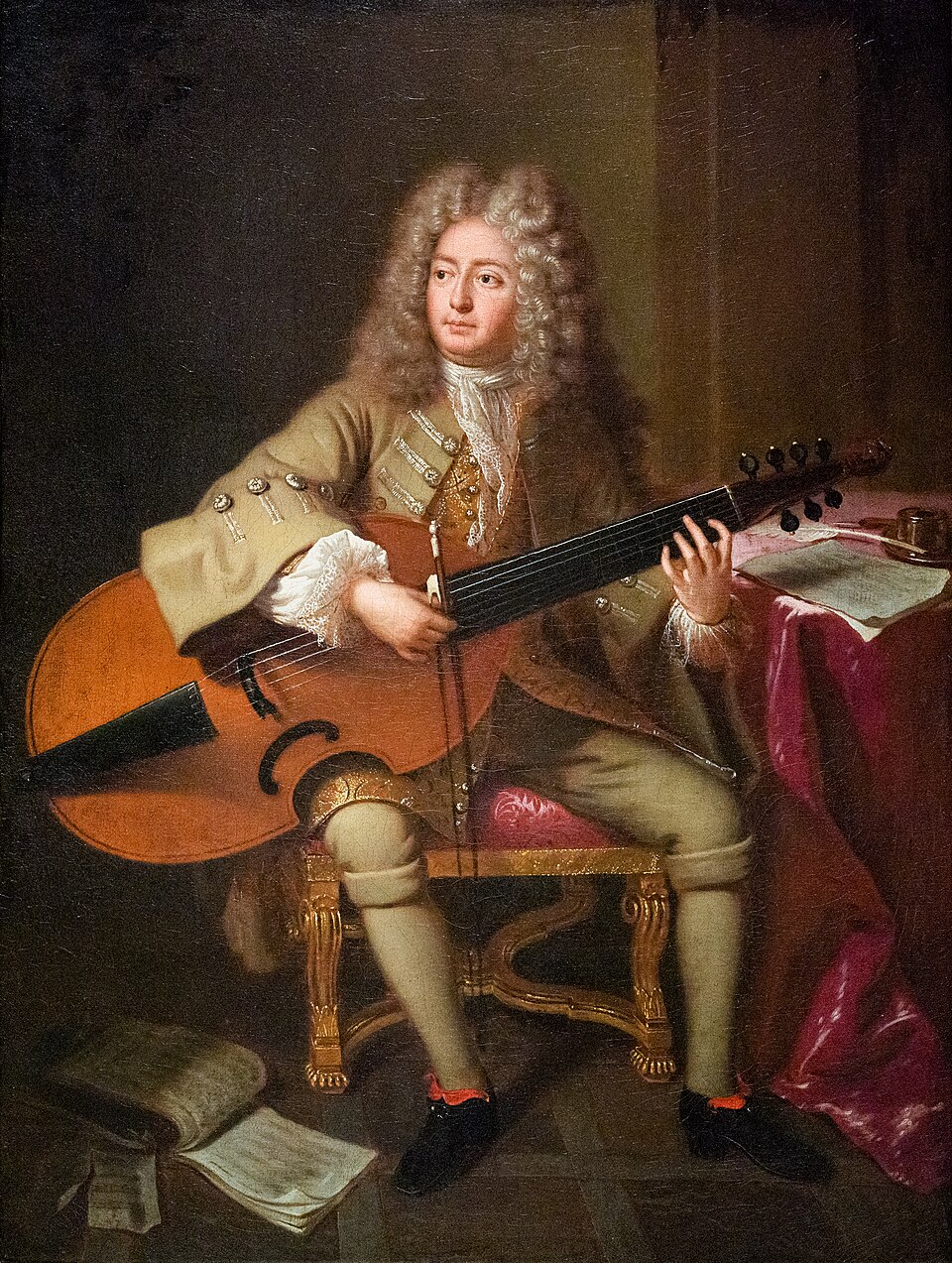
Marin Marais · Baroque
1656 – 1728
1706 · Tragédie lyrique · Paris, Académie royale de musique
Tonality
Without a unique tone. Like all tragédie in musique, he goes through many tonalities along his scenes, dances and chorus.
Instruments
- Sail to five parts (violins, violas and bass)
- Contrabajo (in the famous storm)
- Flutes, oboes and fages
- Tambores
- Continuous low
From the atril
Alcyone, premiered at the Paris Opera in 1706, was the greatest theatrical success of Marais and was reintroduced for decades. It is based on the myth of Alcíone and Ceix, counted by Ovidio: King Ceix leaves on a journey by sea, he shipwrecks in a storm, and his wife Alcíone, desperate, throws himself into the sea; the gods, pitiful, turn them into alions, sea birds.
I can INTEREST you.

The most famous scene is the storm of the fourth act, one of the first great orchestral storms in the history of the opera. Marais, who knew the Opera's pit well, added to the orchestra the contrabajos and redoubles of tambourines designed to imitate the roar of the sea and the wind, effects that caused sensation and were imitated throughout the 18th century. The opera also has moments of great delicacy, such as the dances of sailors and the laments of Alcíone. Recovered in recent times, it shows that the great gambler was also a first-row musical playwright.
What to hear
- The storm of the fourth act.
- Sailor dances.
- Alcíone's laments.

