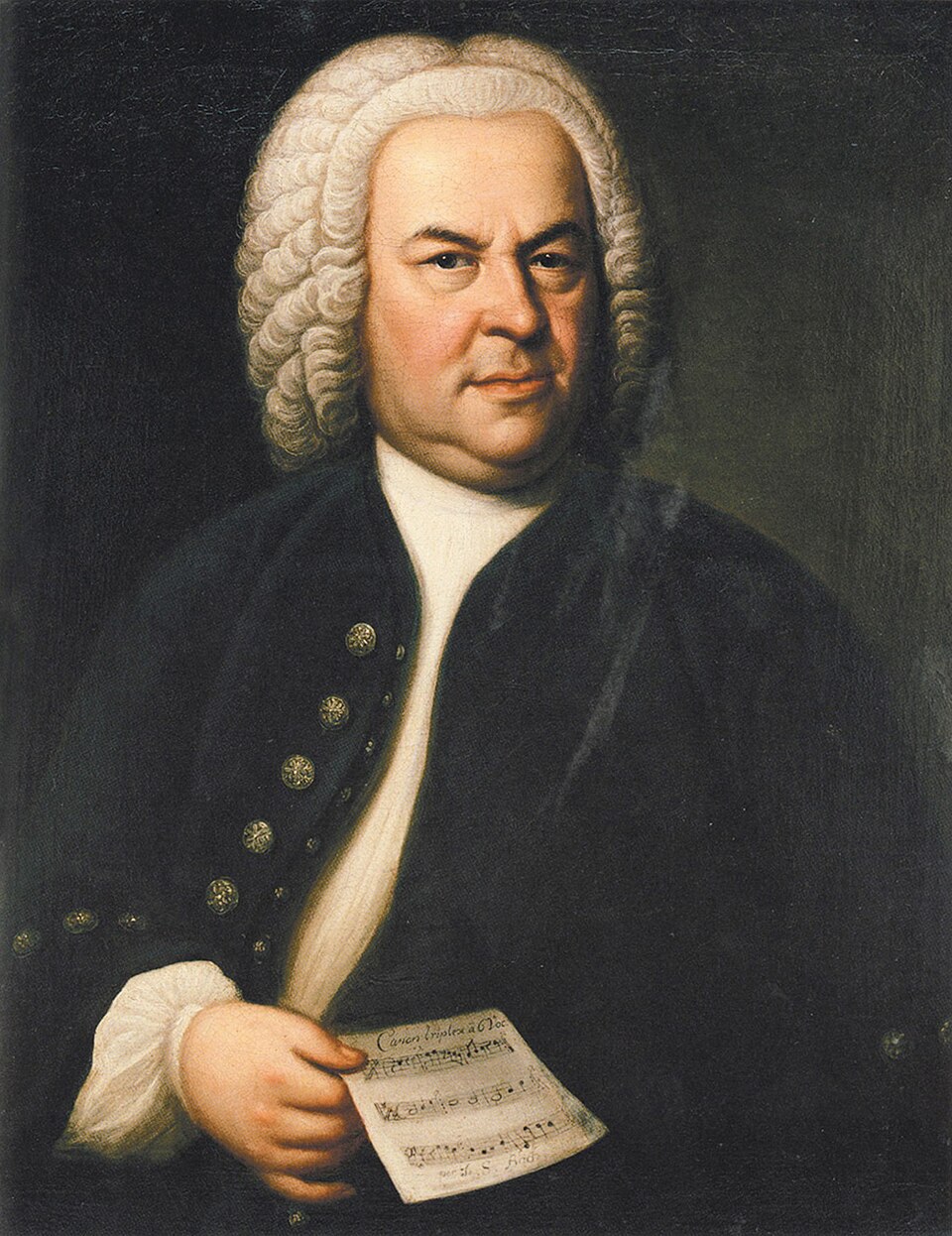
Johann Sebastian Bach · Baroque
1685 – 1750
1721 · Six concerts · Köthen
Tonality
Without a unique tone. There are six concerts: # 1 in fa major, No. 2 in fa major, No. 3 in major sun, No. 4 in major sun, No. 5 in major and No. 6 in if bemol greater.
Instruments
- No. 1: 2 hunting tubes, 3 oboes, fagot, piccolo violin, rope and continuous
- # 2: trumpet, sweet flute, oboe and violin soloists, rope and continuous
- No. 3: 3 violins, 3 violas, 3 cello cello and continuous
- # 4: violin and 2 sweet soloist flutes, rope and continuous
- No. 5: cross-section flute, violin and soloist key, rope and continuous
- Nº 6: 2 violas da braccio, 2 violas da gamba, cello y continuo
From the atril
In 1721 Bach, a chapel teacher in Köthen, sent the margrave Christian Ludwig of Brandenburg a clean copy of six concerts, probably looking for a job. The margrave never touched them, and the manuscripts were forgotten in his library. Today they are the summit of the Baroque concert.
The amazing thing is that there are not two equal: each one uses a different template. The first has hunting tubes and oboes; the second, an acute trumpet with endlessly difficult flute, oboe and violin; the third, nine strings in three groups; the fourth, a virtuous violin with two flutes; the fifth includes a very long only key, almost the birth of the keyboard concert; and the sixth, no more violins, with violas and violas gives dark sound. From the Atril they are a feast: each musician is both a soloist and a member of the whole.
What to hear
- The acute trumpet of Concert No. 2.
- The strings in three groups of # 3.
- The key cadence of # 5.

