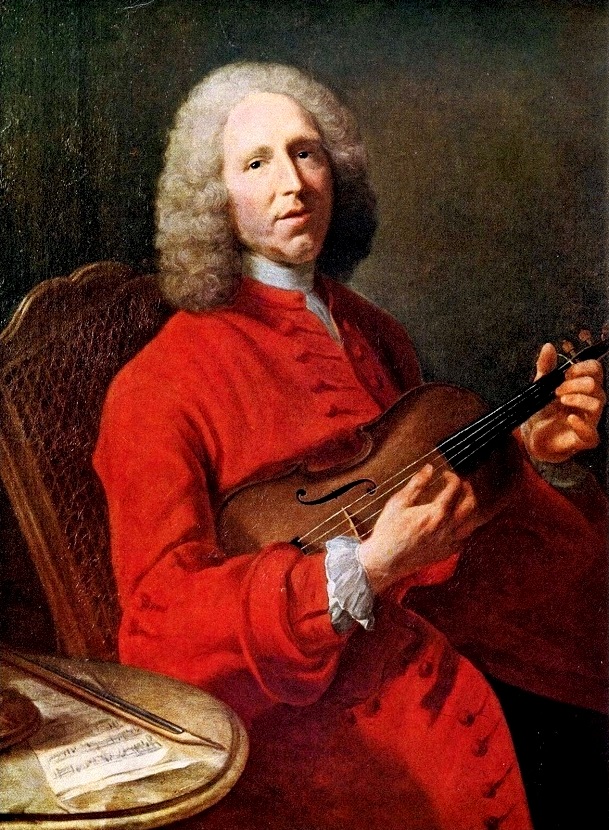
Jean- Philippe Rameau · Baroque
1683 – 1764
1763 · Tragédie lyrique · Recording in 1982
Tonality
Without a unique tone. Like all tragédie in musique, he goes through many tonalities along his scenes, dances and chorus.
Instruments
- Flutes
- Oboes
- Clarifications
- Fagries
- Thrombas
- Rope (violins, violas and bass)
- Continuous low (key)
From the atril
Les Boréades is Rameau's last opera, written at eighty years old. It was rehearsed in 1763, but the representation was cancelled for reasons that are not well known, and the composer died the following year without seeing it on stage. The score slept two centuries in the archives until it was finally represented in 1982, at the Aix-en@-@ Provence Festival, under the direction of John Eliot Gardiner.
It tells the story of Alphise, queen of Bactriana, who must marry a descendant of Bóreas, the god of the north wind, but loves the alien Abaris. The music is amazingly modern. The wind runs through the whole work: in the fourth act, Bóreas unleashes a storm that takes the queen, in an orchestral scene of great violence. The dances, like the famous gavota or the «Entrance of Polymnie», they have a freshness and a delicacy that they already look at Gluck and the Classicism. It is one of the summits of its production.
What to hear
- The storm of the fourth act.
- The «Entrance of Polymnie».
- The seagulls and contradictions.
Listen
Rameau. Opera Les Boréades (Full Opera) | Emmanuelle Haïm, Barrie Kosky | Dijon 2019 | Subtitles · Rameau for You
When you press the YouTube player will be loaded.

