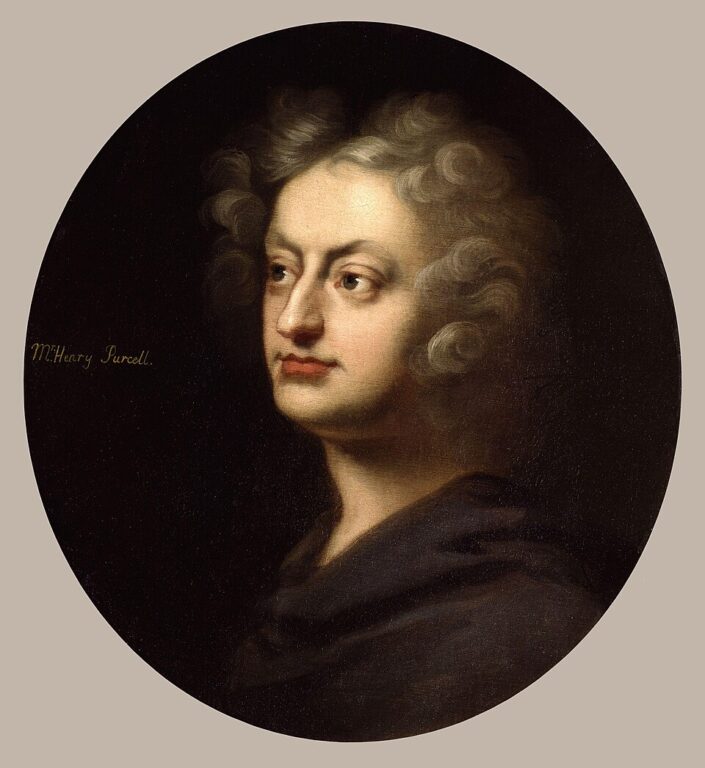
Henry Purcell · Baroque
1659 – 1695
1683 · Two violins and continuous · London
Tonality
Without a unique tone. It's two collections of sonatas and each has his own.
Instruments
- 2 violins
- Bajo de violín o viola da gamba
- Continuous low (organ or key)
From the atril
In 1683, at the age of 24, Purcell published his Sonnata's of III Parts: 12 sonatas for two violins, low and continuous. In the preface he explained that he had wanted to do a «fair imitation of the most famous Italian teachers»to bring a style that was still strange to the English public. After his death, his widow published in 1697 another collection, the Ten Sonatas in Four Parts.
I can INTEREST you.

The model is Italian, but the result is very Purcell. The sonatas chain short and contrasted sections, with leaks of great ingenuity, slow movements of bold harmonies and bitten disonances, and light endings of dance air. There is a very English melancholy in the adagies and a taste for the counterpoint that comes from the tradition of the fantasies for violas. The most famous, the call «Golden Sonata»It belongs to the posthumous collection.
What to hear
- The escaped sections, full of ingenuity.
- The slow movements, with their expressive disonances.
- The «Golden Sonata» from the 1697 collection.
Listen
Henry Purcell, Twelve Sonatas of three parts (1683) · Nous _ Geneticus beta
When you press the YouTube player will be loaded.

