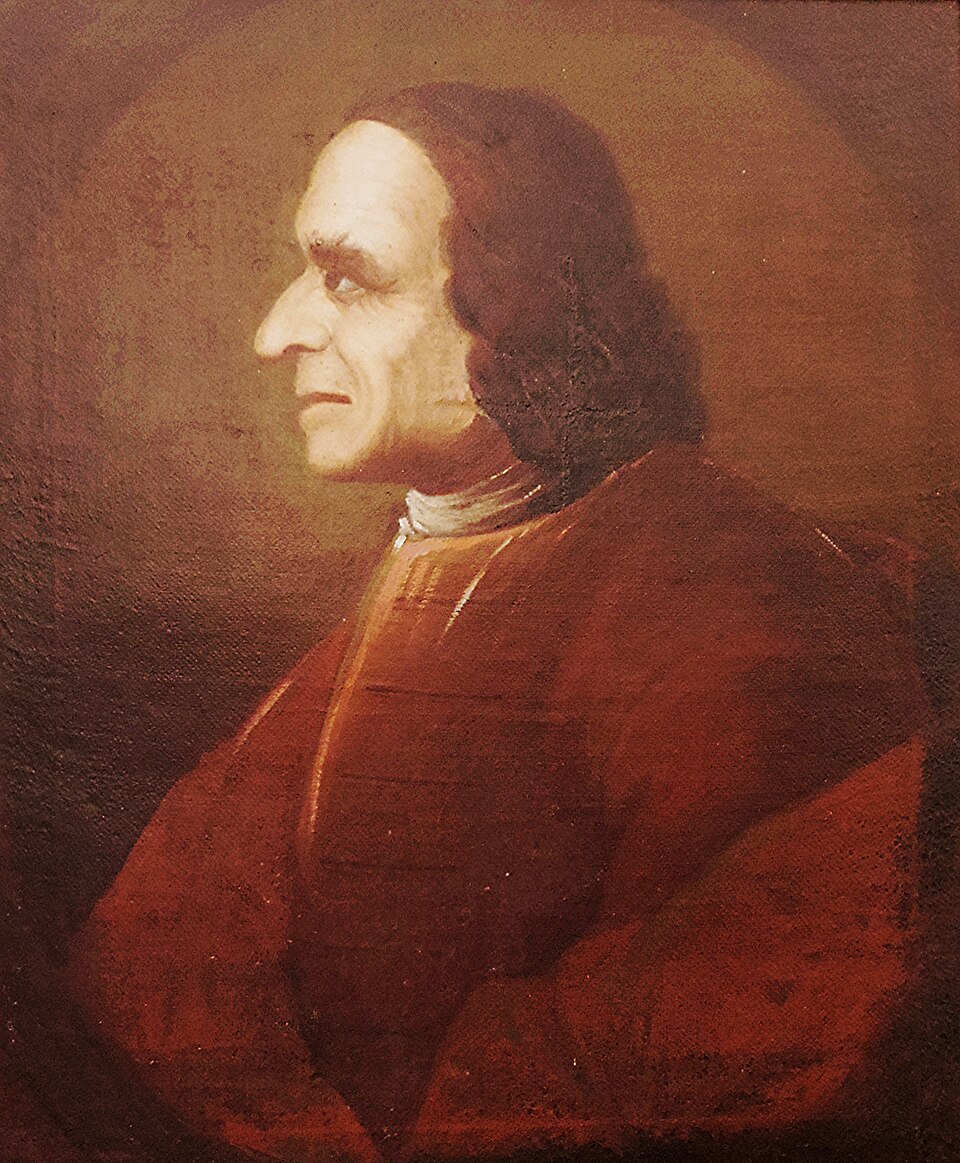
Giuseppe Tartini · Baroque
1692 – 1770
1754 · Treaty of theory · Padua
Tonality
It has no tonality: it is not a work to interpret, but a theoretical treaty on harmony.
Instruments
- None: it is a theoretical treaty, not a work to interpret.
From the atril
The Trattato di musica secondo la vera scienza dell'harmoniapublished in Padua in 1754, is Tartini's great attempt to explain harmony from physics and mathematics. In it he describes the phenomenon he had discovered decades before: the «terzo suono», or third sound, a serious note that is heard when two sharp notes sound together with perfect tuning.
For a practical musician, the treaty is dense and sometimes dark, and his general theories were very much discussed already in his time. But the idea of the third sound has a very concrete application that any violinist can see: by playing double strings, if the tuning is just, you hear that ghost sound; if it unhints, it disappears or changes. Tartini used it with his students as a tool to tune. It's a fascinating example of how an interpreter thought the sound.
What to hear
- The third sound in the double tuned strings.
- The relationship between just tuning and harmony.
- Tartini's sonatas with double strings.

