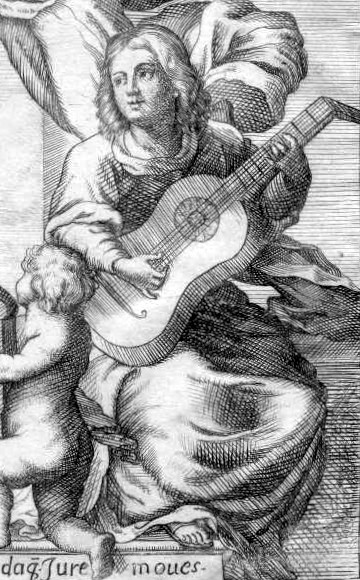
Gaspar Sanz · Baroque
1640 – 1710
h. 1674 · Baroque Guitar · Zaragoza
Tonality
No tonality indicated in the title. Sanz wrote it in numbers for Baroque guitar, and the tone in which it is played today depends on transcription.
Instruments
- Five-order Baroque Guitar
From the atril
The folia was born on the Iberian Peninsula as an unbridled popular dance, and in the 17th century it became a fixed harmonic scheme on which half of Europe wrote variations: Corelli, Marais, Vivaldi and, much later, Rachmaninov. Sanz's folies are of the earliest guitar versions and show the theme still close to its Spanish origin.
I can INTEREST you.

Playing some folies is like improvising about a progression that everyone knows. The bass and chords are repeated, and each variation has to bring something new: a different rhythm, an ornament, a faster figuration. In the Baroque guitar, the scratching gives the dance its original strength, almost a popular party, and the stitching allows more fine moments. The guitarist can, and should, add something of his own.
What to hear
- The harmonic scheme that is repeated in each turn.
- The scratch as an echo of popular dance.
- The comparison with «The Folia» from Corelli.
Listen
Gaspar Sanz, Folías, Españoleta and Canarios, Baroque guitar. · Lander Music
When you press the YouTube player will be loaded.

