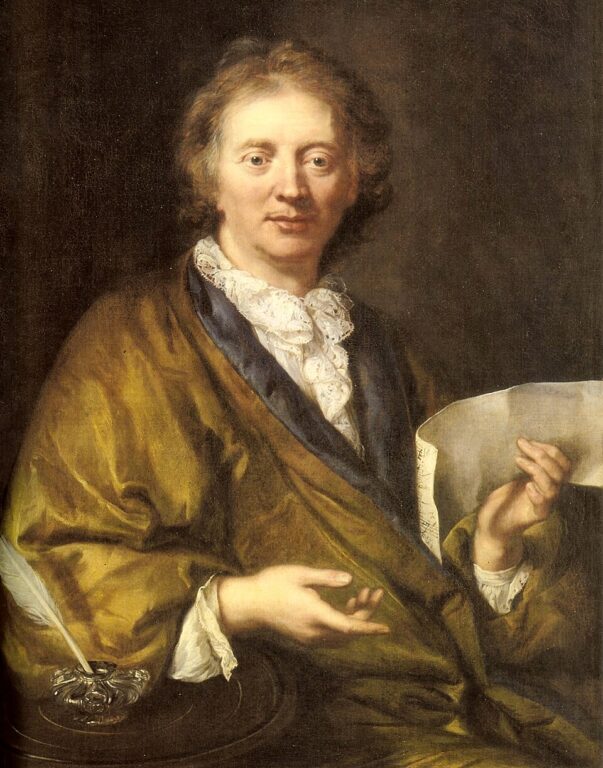
François Couperin · Baroque
1668 – 1733
1725 · Camera music · Paris
Tonality
Without a unique tone. It is a succession of short scenes, each with its title and character.
Instruments
- 2 violins (or other acute instruments)
- Continuous bass (gamba and key viola)
From the atril
A year earlier, Couperin had paid tribute to Corelli with Le Parnasse, ou l'apothéose de Corelli. Here he does the same with Lully, the great composer of the court of Louis XIV, in a work with an almost theatrical argument: Lully reaches the Champs Elysées, is received by Apollo, goes up to Parnaso and meets Corelli. The muses encourage them to gather their styles, and they both play together.
Each movement has a title that explains the scene, and music counts it with a lot of humor. When Lully and Corelli play together, they first accompany each other in their own style, one in French and the other in Italian, and in the end they join in a three-way sonata. For interpreters it is a delicious game of styles: you have to change character, ornamentation and articulation according to who «Talk.». It is the musical manifesto of Couperin: to gather the two great tastes of his time.
What to hear
- Lully's arrival in the Champs-Elysées.
- The dialogue between French and Italian.
- The final three-way sonata, «La Paix du Parnasse».
Listen
François Couperin - L'Apothéose de Lully (1725) · Cmaj7
When you press the YouTube player will be loaded.

