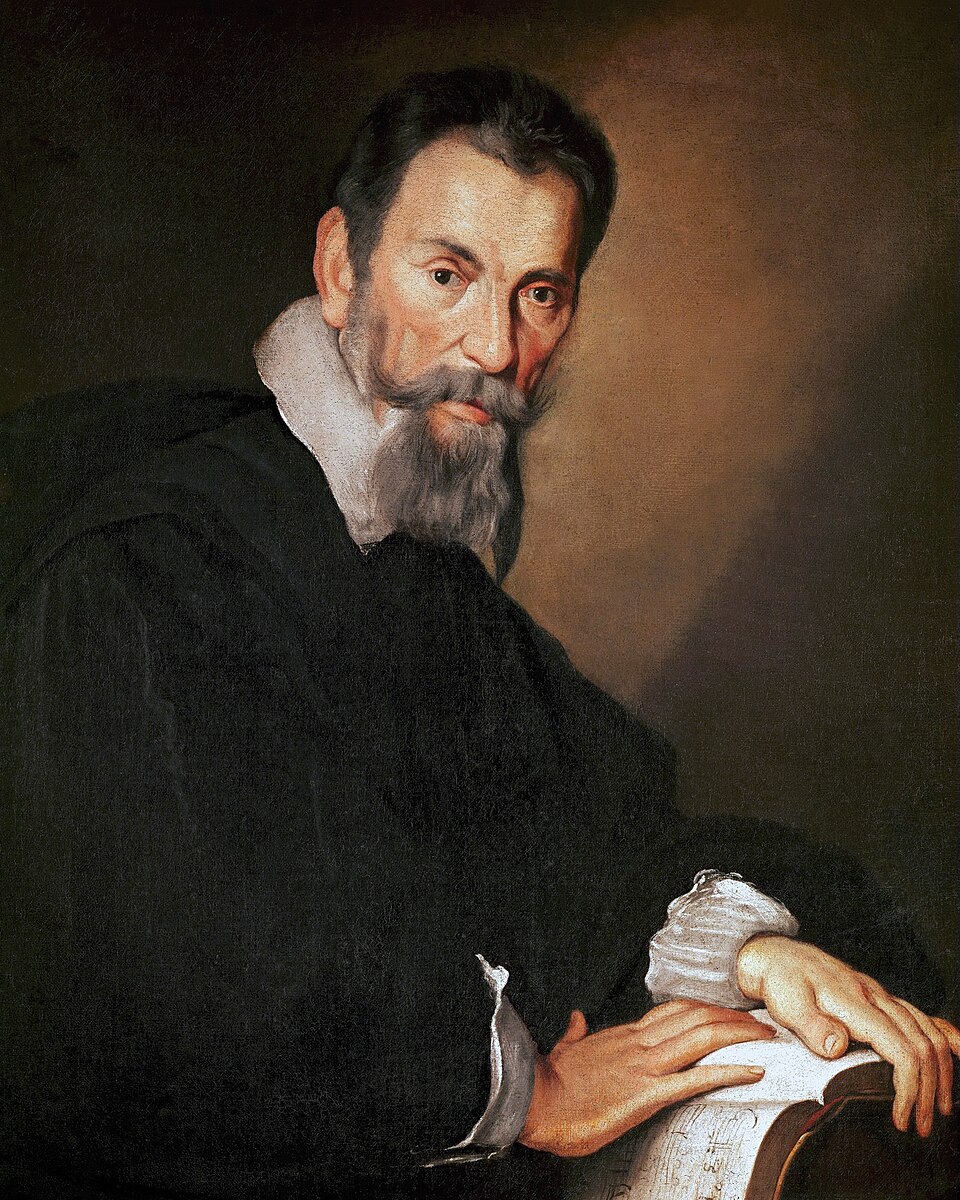
Claudio Monteverdi · Baroque
1567 – 1643
1607 · Favola in music · Mantua
Tonality
Without a unique tone. It is modal music from the early 17th century, prior to the modern system of larger and minor tonalities, and the opera runs many different tonal centers.
Instruments
Monteverdi included at the beginning of the score printed in Venice in 1609 the complete list of instruments involved in the work, something very unusual in its time:
- 2 carnationsgravicembani)
- 2 viola contraband (viola contrabassi)
- 10 violas da braccio (viole da brazzo)
- 1 double harp (doppia harp)
- 2 small violins to French (violini piccoli alla francese)
- 2 chitaroni
- 2 wood organs (organi di legno)
- 3 violas da gamba bajas (bassi da gamba)
- 4 thrombons (sachet)
- 1 regal
- 2 cornet (cornetti)
- 1 flautin (flautino alla vigesima seconda)
- 1 clarin and 3 trumpets with satin
From the atril
It premiered in 1607 in the ducal palace of Mantua, before members of an academy of nobles, with a libretto by Alessandro Striggio. It was not the first opera, but it was the first that has come alive until today: in it Monteverdi converts the Florentine experiment of the recitar singing in true musical theatre. It tells the myth of Orpheus, which comes down to the unbelievers to rescue Euridice with the only power of his singing.
I can INTEREST you.

Start with a Tocata of trumpets and drums that is almost a fanfare of the Gonzaga family, and the score accurately indicates which instruments should sound in each scene: corneas and thrombones for the underworld, violins and flutes for the pastors, a rough sound regal for the barber Caronte. For the continuum is a banquet of colors. The center is the aria Possente spirtoin which Orpheus tries to soften the barber with an increasingly ornate song, accompanied by violins, corneas and harp that respond in echo.
What to hear
- The Tocata initial, repeated three times.
- The account of the Messenger that announces the death of Euridice.
- Possente spirtowith their instruments in echo.
Listen
Claudio Monteverdi - L'Orfeo · Charles Souza
When you press the YouTube player will be loaded.

