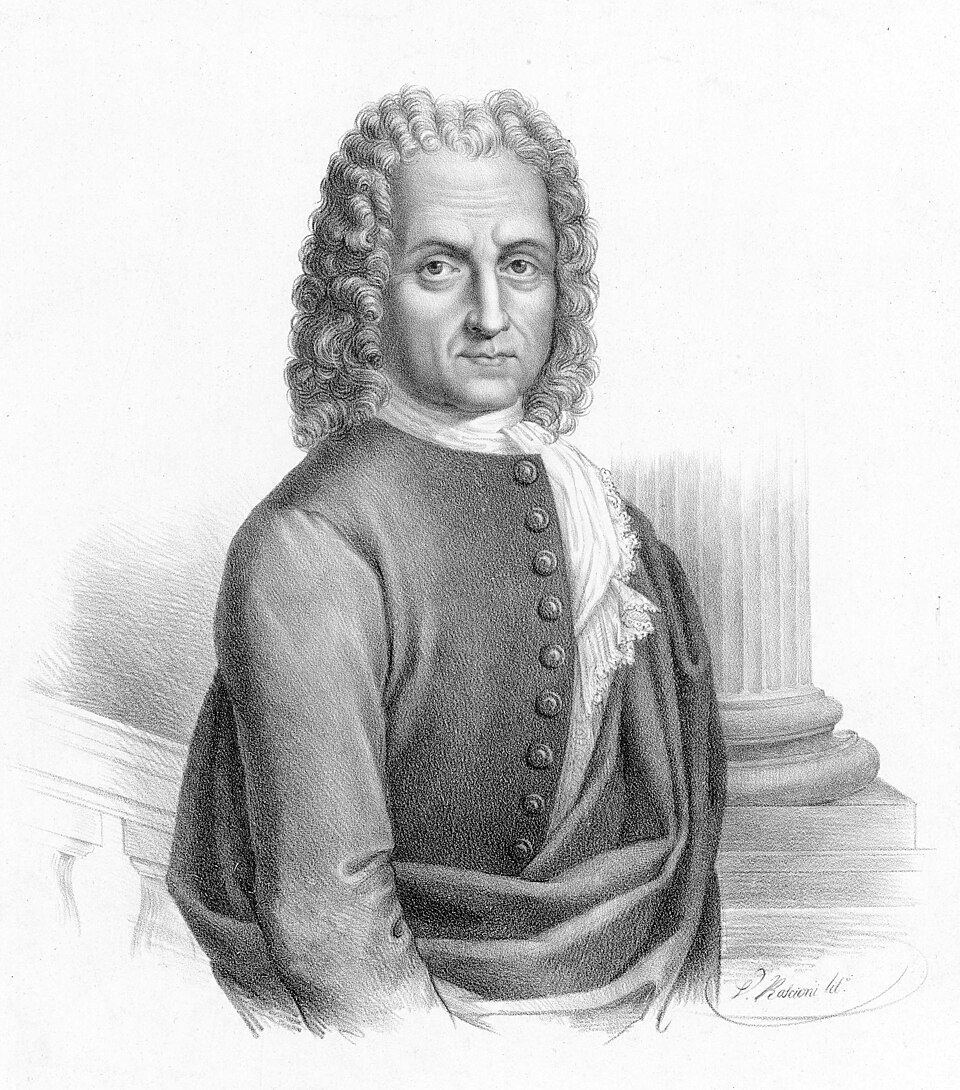
Baroque · Italy
1686 – 1739
Venice - Brescia
Review
Member of the Venetian nobility, he shared music with a career as a lawyer and magistrate of the Republic of Venice.
His pamphlet Il teatro alla fashion (1720) is a biting satire of the vices of the opera of his time. His great work is the fifty psalms of the poetic-harmonic ester. He should not be confused with his brother Alessandro, author of the famous oboe concert in a minor re.
He was a member of the Council of the Forty of Venice and held government positions in Pola and Brescia, where he died. His private life gave him to talk: he secretly married a young singer of humble origin, marriage that his family never accepted. He was a member of the Academy of Arcadia and also wrote poetry.
In his psalms, on Italian paraphrase of Giustiniani Giolamo, he combined the modern style with melodies of the synagogue and ancient Greek song, something very original for the time. They were admired throughout the 18th century, from Telemann to Mattheson. His instrumental music, especially cello sonatas, is still often played. These are his main works:
I can INTEREST you.


