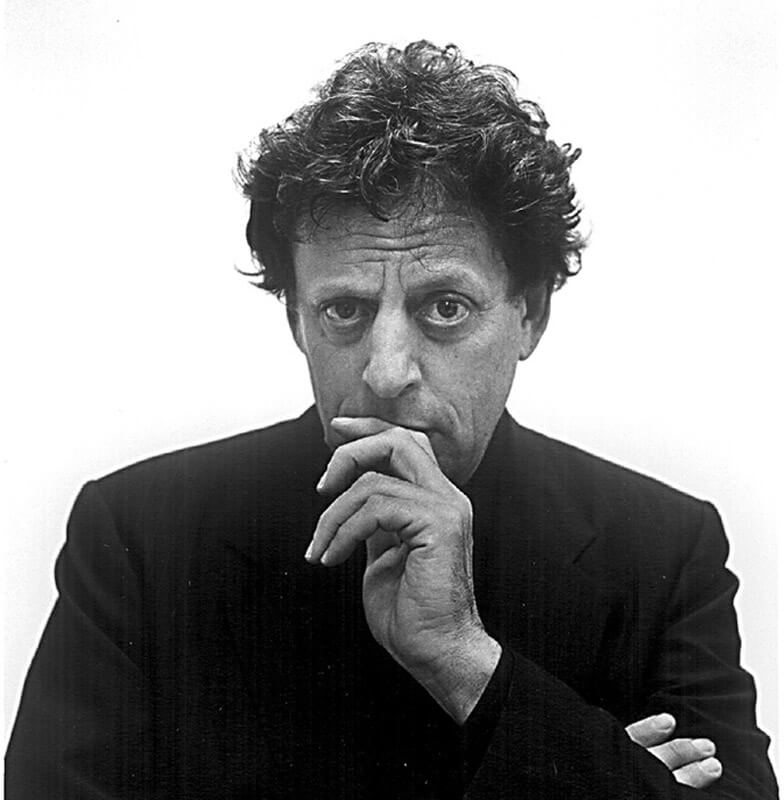
Philip Glass · Minimalism
n. 1937
1980 · Opera · Rotterdam
Tonality
Without a unique tone. Like every opera, it goes through a lot of tonalities, always on repeated chord progressions.
Instruments
- Wood
- Electrical organ
- Row
- Solists and chorus
From the atril
Second opera of the trilogy of Glass portraits, between Einstein on the Beach and Akhnaten, was released in Rotterdam in 1980. He tells the Gandhi years in South Africa, where he developed the satyagraha, «force of truth», his method of non-violent resistance. Constance DeJong's libretto takes its texts from Bhagavad Gita and is sung in Sanskrit, so the public follows action by images rather than by words. Each act is chaired by a figure who watches the scene: León Tolstói, Rabindranath Tagore and Martin Luther King.
I can INTEREST you.

In front of the amplified sound of Einstein, here Glass writes for an orchestra without metals or percussion, of warm and meditative color. The vocal lines are long and serene, almost like ritual songs. The end of the opera is famous: Gandhi sings a simple ascending scale, repeated over and over again, as a prayer that does not end. For the main tenor it is an exercise of control and calm, rather than of power.
What to hear
- The sound without metals or percussion of the orchestra.
- The Sanskrit Choirs.
- Gandhi's ascending scale in the final scene.
Listen
Philip Glass's Satyagraha · English National Opera
When you press the YouTube player will be loaded.

