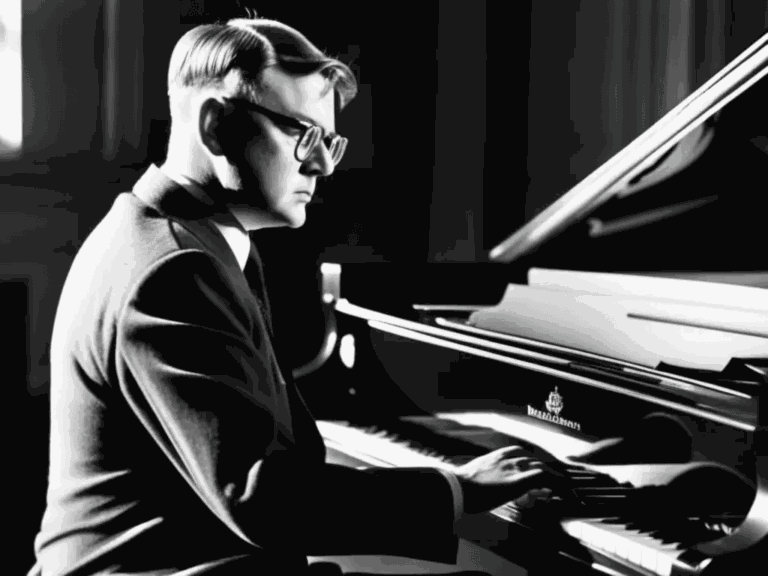
Dmitri Shostakovich · 20th century
1906 – 1975
1924 - 1925 · premiere 1926 · Symphony · Leningrad
Tonality
Fa minor, op. 10.
From the atril
Shostakovich wrote it as a study-end work at the Leningrad Conservatory and premiered it Nikolai Malkó with the city Philharmonic on May 12, 1926. The composer was nineteen. In a very short time, Bruno Walter was led in Berlin, Leopold Stokowski in Philadelphia and Arturo Toscanini in New York: few raw operas have had such a successful take-off.
From the first bar, his voice is already recognized: a trumpet with satico and a fagot that dialogue as characters of a silent cinema, irony, running rhythms and transparent orchestration, almost of camera music. The piano enters the orchestra as another instrument, with a brilliant role in the scherzo, heritage of his years as a film pianist. But the slow, with its painful oboe, and the timbal redoubling that links it with the end announce the tragic Shostakovich of the great symphonies. It's a work of youth that sounds like maturity.
What to hear
- The initial dialogue between the trumpet with sativa and fagot.
- The leading piano of the scherzo.
- The timbal tamper that links the slow to the end.
Listen
Shostakovich - Symphony No. 1 in F minor, Op. 10 (Teodor Currentuzis, Mahler Chamber Orchestra) | 3 / 3 · EuroArtsChannel
When you press the YouTube player will be loaded.

