The best classical music
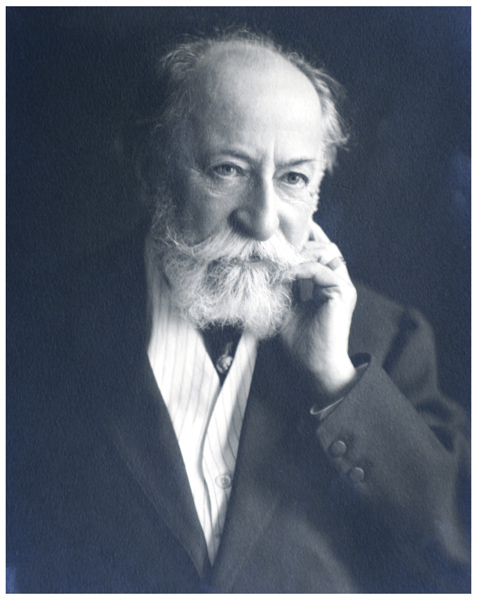
Camille Saint-Saëns: Life and Works
Life:
Camille Saint-Saëns (1835-1921) was a French composer, pianist, organist and conductor, considered one of the most outstanding musicians of the 19th century. He was born on October 9, 1835 in Paris, France, and showed a very young prodigious talent. At two, he was playing the piano, and at ten he gave his first public concert. He entered the Paris Conservatory, where he studied organ and composition.
Saint-Saëns was a prodigy child and a scholar in multiple disciplines, including music, mathematics, literature and science. Throughout his life, he was a defender of French music and a critic of Wagnerianism, although he admired Richard Wagner's technique. He was the founder of the Société Nationale de Musique in 1871, which promoted French music and supported young composers.
He died on 16 December 1921 in Algiers, Algeria, while traveling, leaving a vast and diverse musical legacy.
Main works:
Saint-Saëns composed in a wide variety of genres, from operas and symphonies to camera music and piano pieces. Some of his most outstanding works include:
- «The Carnival of Animals» (1886):
Humorous suite for camera ensemble, famous for movements like «The swan» and «Guns». Although he composed it as a fun work, Saint-Saint- Saihns prohibited its publication in life so as not to be associated with a light piece.
2. Symphony No. 3, «Symphony with organ» (1886):
One of his most famous works, written for orchestra and organ. It is known for its grandiosity and innovative use of the organ in a symphony.
3. Concert for piano No. 2 in Sun Minor (1868):One of his most popular concerts, known for his virtuosism and lyrism.
4. Concert for violin No. 3 in Si minor (1880):
A masterpiece of the violinistic repertoire, appreciated for its melodic and demanding technical beauty.
5. «Samson et Dalila» (1877):
One of his most famous operas, known by the aria «Mon coeur s'ouvre à ta voix» and the choir «Bacchanale».
6. «Danse Macabre» (1874):
A symphonic poem based on a poem by Henri Cazalis, which describes the dance of death on Halloween night.
7. Concert for cello No. 1 in La menor (1872):
An important work in the cello repertoire, full of passion and virtuosism.
8. «Introduction and Rondó Capricoso» (1863):
A piece for violin and orchestra, known for its brilliance and technical difficulty.
Legacy:
Saint-Saëns was a bridge between romanticism and modernism, influencing later composers such as Maurice Ravel and Gabriel Fauré. Although it was sometimes criticized for its conservative style, its technical mastery and its ability to combine classic forms with harmonic innovations consolidated it as one of the great composers of its time. His music is still widely interpreted and appreciated today.
Concerts for all
The concerts of classical music, modern music and Jazz for all audiences at @ ondabradio.

The best quality of dissemination
DAB + (Digital Audio Broadcasting)
Listen to DABclassic on your FM / DAB + radio with the best quality in Spain in Barcelona, Ibiza, Madrid, Murcia, San Sebastián, Sevilla, Tenerife Norte, Valencia and Zaragoza.
Patrocina DABclassic radio. info @ dabclassic.com




Explore the Episodes
Podcast

