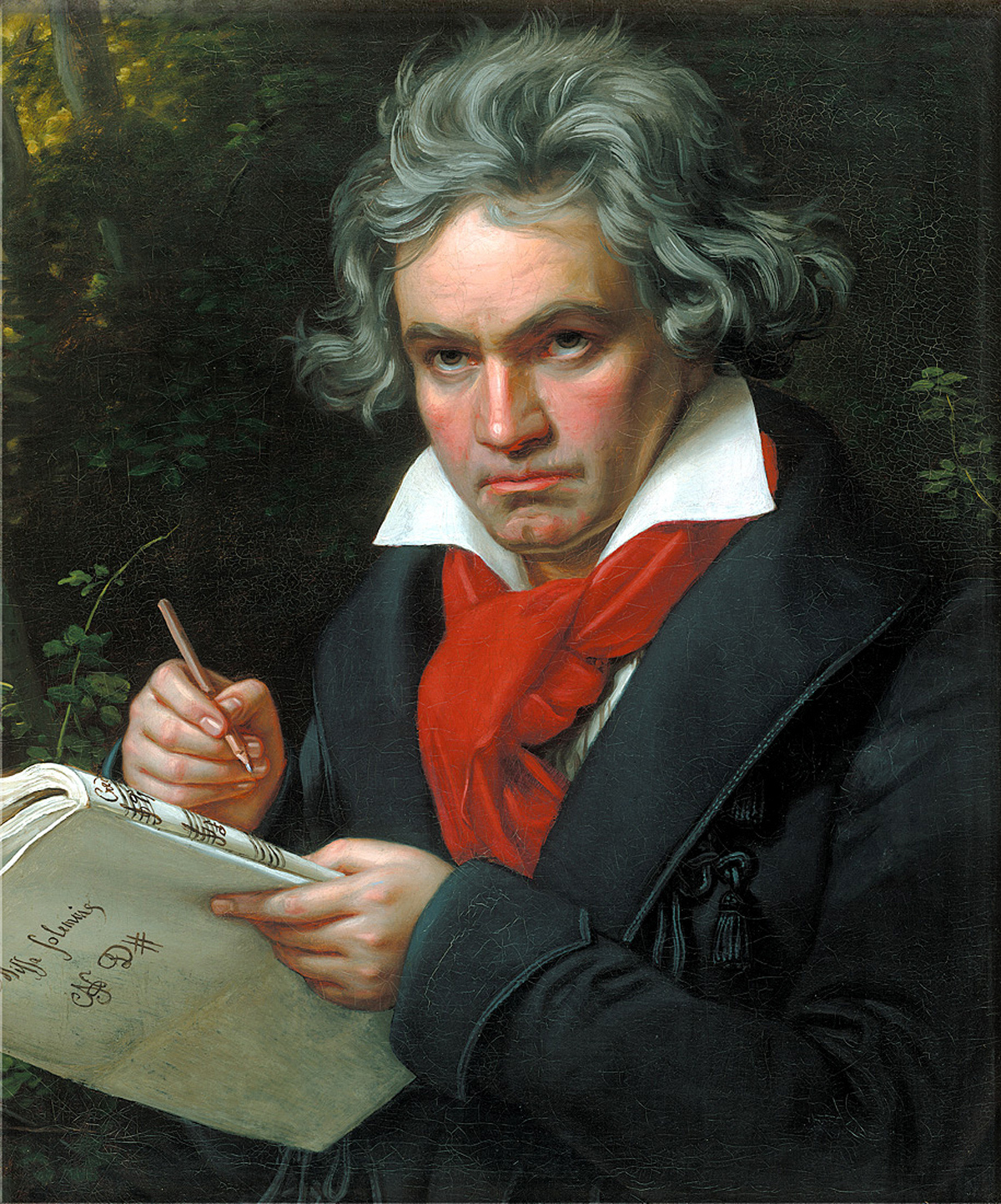
The best classical music
Lludwig van Beethoven (1770- 1827) was a German composer and pianist, considered one of the most influential musicians in history. His work marked the transition from Classicism to Romanticism and covered a wide variety of genres, including symphonies, concerts, sonatas and camera music.
Life of Beethoven
Children and Youth (1770-1792)
Beethoven was born in Bonn, Germany, on 16 December 1770. His father, Johann van Beethoven, was a court musician and gave him a strict musical education since he was a child. In 1787 he travelled to Vienna to study with Mozart, but had to return to Bonn due to his mother's illness.
First Years in Vienna (1792-1802)
In 1792, Beethoven moved to Vienna, where he studied with Joseph Haydn and other teachers. He quickly became famous as a virtuous pianist and composer. During this stage he composed his first sonatas and his First Concert for Piano.
Period of Crisis and Deafness (1802-1815)
From 1802, Beethoven began to lose the hearing, which plunged him into a personal crisis reflected in his Heiligenstadt's Testament. Despite this, he composed some of his most important works, such as the Symphony No. 3 «Heroica» and Symphony No. 5.
Last Years and Master Works (1815- 1827)
As his deafness became worse, Beethoven isolated himself from the world and communicated through conversation books. At this time he composed his Ninth Symphonywith the famous «Anthem to Joy»And his last piano sonatas and string quartets. He died on March 26, 1827 in Vienna.
Featured works by Beethoven
Symphonies:
- Symphony No. 3 «Heroica» (1804) - It marked the beginning of Romanticism.
- Symphony No. 5 (1808) - With his famous four-note motif.
- Symphony No. 6 «Pastoral» (1808) - Inspired by nature.
- Symphony No. 9 «Coral» (1824) - Contains «Anthem to Joy».
Piano tunes:
- Sonata «Luna Claro» (1801) - One of its most famous.
- Sonata «Appassionata» (1805) - Intense and dramatic.
- Sonata «Hammerklavier» (1818) - Technical and complex.
Camera music:
- String quarters – Especialmente los últimos, considerados revolucionarios.
Otras obras:
- Conciertos para piano – Especialmente el n.º 5 «Emperador».
- Misa Solemnis (1823) – Considerada una de sus mejores obras sacras.
- Ópera «Fidelio» (1805) – Su única ópera, con un mensaje de libertad.
Beethoven dejó un legado inmenso y su música sigue siendo una de las más interpretadas y admiradas en la historia.

