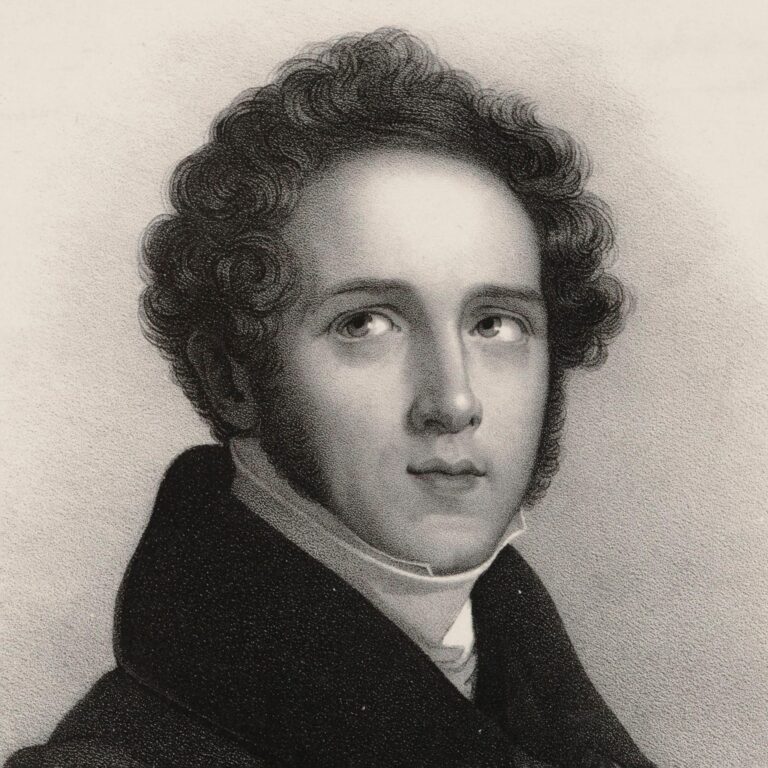
Vincenzo Bellini · Romanticism
1801 – 1835
1833 · Opera · Venice
Tonality
Without a unique tone. Like every opera, it goes through many tonalities along its aryan, chorus and scenes.
From the atril
Beatrice di Tenda, which was released in Venice in 1833, was born in difficult circumstances: the librettist Felice Romani delivered the text very late, and Bellini had to compose in a hurry. They both ended up publicly facing in the newspapers, and it was their last collaboration. The opera had no initial success, but today it is valued as a work of great dramatic force.
I can INTEREST you.

The story is based on a real 15th-century episode: Beatrice, wife of the Duke of Milan Filippo Maria Visconti, is falsely accused of adultery by her husband, who wants to get rid of her to marry another. Despite his innocence, he is sentenced to death. Bellini writes for the protagonist a noble and painful music, culminating in a great final scene, in which Beatrice forgives her enemies before going to the gallows. There are also sets and choirs of great effect. It's a less well-known opera than Standard, but that anticipates in some respects the drama of Verdi.
What to hear
- Beatrice's noble music.
- The chorus and sets.
- The final scene before the gallows.

