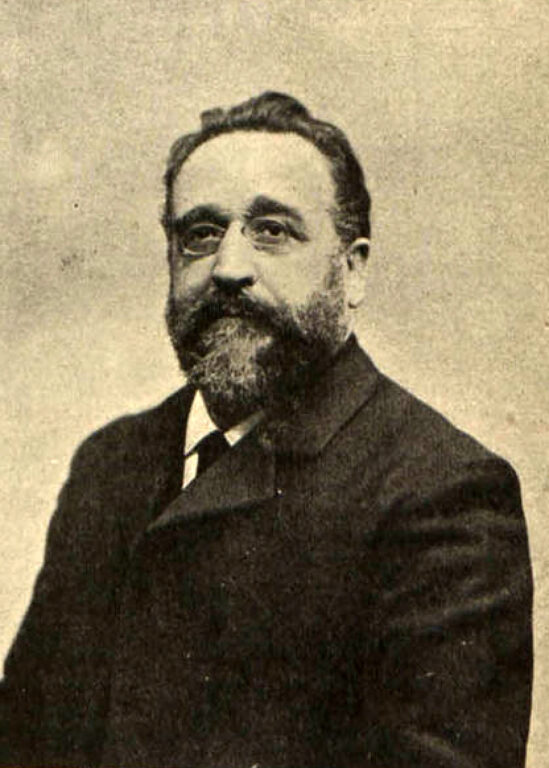
Ruperto Chapi · Romanticism
1851 – 1909
1891 · Zarzuela · Madrid
Tonality
Without a unique tone. Like all zarzuela, it goes through many tonalities along its numbers.
From the atril
The king who rabbled, released in Madrid in 1891 with a libretto by Vital Aza and Miguel Ramos Carrión, is a comic zarzuela in three acts that functions almost as an opera, in the style of Offenbach. It is a kind satire of the power, the court and the incompetence of the wise, which continues to make them laugh more than a century later.
A young king, tired of the palace life, decides to walk his kingdom disguised as a shepherd to meet his people. During the trip she falls in love with a peasant, Rosa, and has a thousand perispecia. Meanwhile, in the court, a dog that the king had caressed escapes, and the ministers and doctors are convinced that the monarch has contracted the rage, which unleashes the chaos. The most famous number is the chorus of doctors, who discuss the disease with ridiculous solemnity. The score has an admirable grace, lightness and orchestral quality, with very lyrical breaks and bright set numbers.
What to hear
- The doctors' choir.
- Rosa's lyrical romances.
- The court set numbers.

