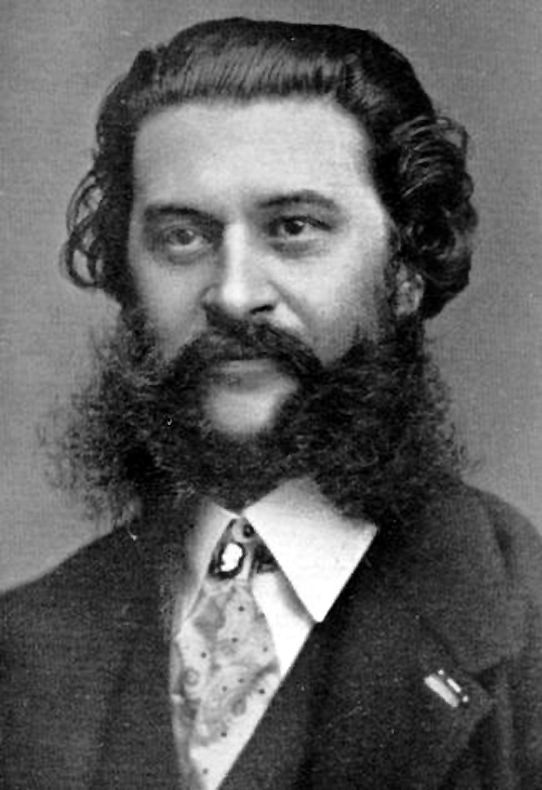
Johann Strauss son · Romanticism
1825 – 1899
1867 · Vals · Vienna
Tonality
From the atril
An der schönen blauen Donau («Next to the beautiful blue Danube») is probably the most famous waltz in history and the informal anthem of Vienna. Curiously, he was born as a coral piece for the Vienna Men's Coral Society, with a rather clumsy text, and his premiere in 1867 was warm. The success came months later, in the purely orchestral version, at the Universal Exhibition of Paris.
I can INTEREST you.

The introduction is magical: a soft trimolo of the violins in the major, on which the tubes draw the famous ascending arpeggio, like the dawn on the river. Then five different waltz are chained, each with its character, and a code that recapitulates the themes. Playing it well is more difficult than it seems: the Viennese waltz has a peculiar rhythm, with the second time of the slightly anticipated compass, that the Viennese orchestras carry in the blood. Every January 1, at the New Year's Concert, its first compasses give the public the applause.
What to hear
- The trémolo and the tube arpeggio of the introduction.
- The Viennese rhythm with the second time ahead.
- The code that recapitulates the issues.
Listen
J. Strauss II: An der schönen blauen Donau, Waltz, Op. 314 · Berliner Philharmoniker
When you press the YouTube player will be loaded.

