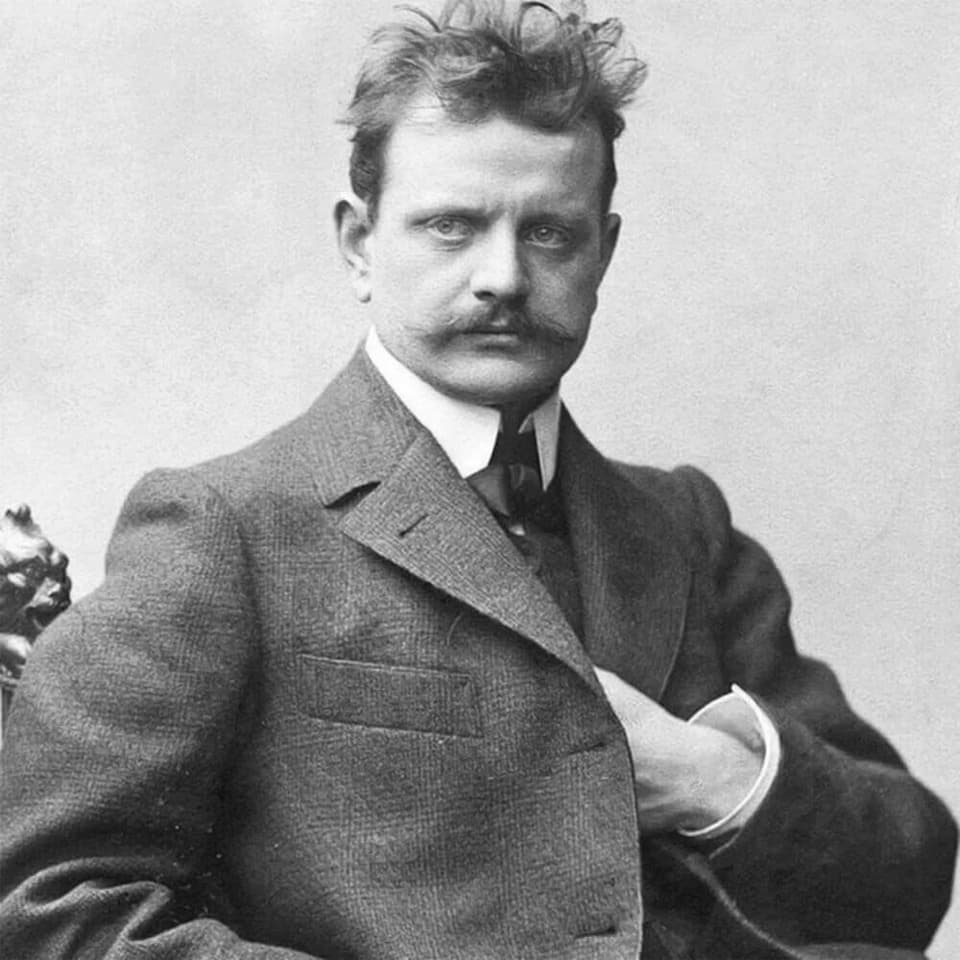
Jean Sibelius · Romanticism
1865 – 1957
1899 · revised in 1900 · Symphonic poem · Helsinki
Tonality
From the atril
In 1899, Tsar Nicholas II hardened the censorship and rusification of Finland, then a great duchy of the Russian Empire. In protest, the Finnish press organized days with historical paintings, and Sibelius wrote the music. The last number, revised the following year, became Finland, a hymn of resistance so powerful that the Russian authorities forbade him to meet that title, and he circulated in disguised names.
I can INTEREST you.

The work begins with serious and threatening chords of the metals, which symbolize oppression, followed by a lament of the woods and the ropes. Then a combination of combative energy breaks out, with fanfare and agitated rhythms. In the center is the famous hymn, first on the woods and then on the ropes, a serene and noble melody that has become almost a second Finnish national hymn, with added text later. The end is triumphant. For metals, it is a work of light; for the public, always emotional.
What to hear
- The threatening chords of the beginning.
- The central anthem in woods and ropes.
- The triumphant end of the metals.

